
 Pin it
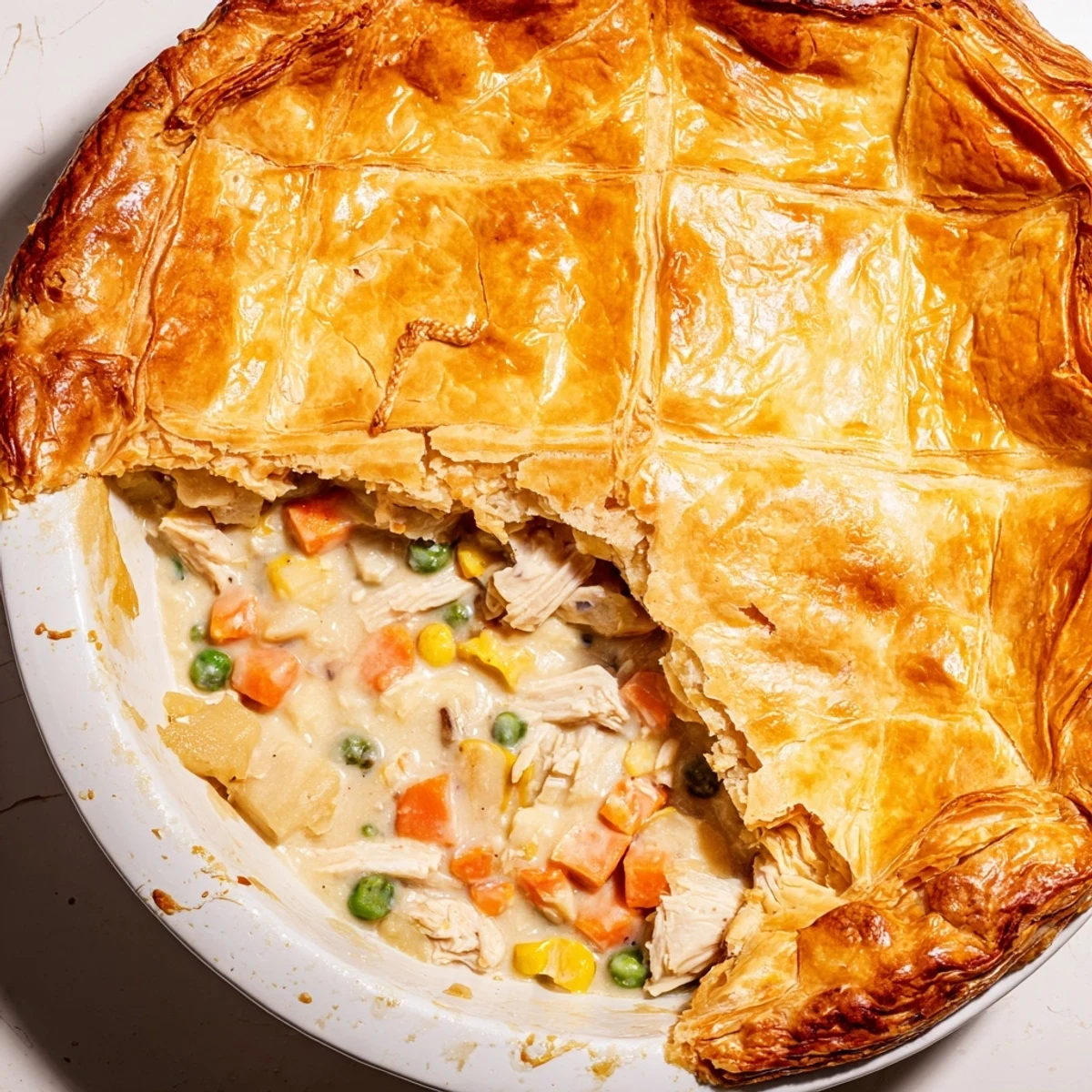
 This dish features tender turkey and a blend of carrots, celery, peas, and potatoes in a creamy sauce, all enveloped by a golden, flaky puff pastry crust. The filling is thickened with a buttery roux and seasoned with thyme, sage, salt, and pepper to create a rich and warming flavor. Baked until bubbly and golden, it's ideal for using leftover poultry and bringing comfort to the dinner table. Serve with fresh herbs or a crisp salad for a satisfying, home-cooked experience.
There's something about the smell of a pot pie baking that makes a kitchen feel like home, even if you're just using up turkey from last week's dinner. I stumbled onto this version on a Tuesday night when my fridge was full of post-holiday leftovers and the weather turned cold—the kind of evening that demanded something warm and substantial. One bite of that creamy filling under the shattered golden crust, and I understood why this dish has quietly stayed on tables for generations.
I made this for my sister's family on a rainy Saturday, and watching their faces when they cracked through that golden crust made me realize how much of cooking is really about creating a moment. My nephew said it tasted like the kind of food that makes you feel like everything's going to be okay, which might be the best compliment a pot pie could ever receive.
Ingredients
- Cooked turkey, 3 cups diced or shredded: This is where good judgment matters—you want pieces large enough to taste, not so small they disappear into the sauce. Rotisserie chicken works beautifully if turkey isn't what you have.
- Carrots, 1 cup diced: The sweeter vegetable in the mix, they soften into the cream and add a whisper of natural sugar that balances the savory herbs.
- Celery, 1 cup diced: This builds the flavor foundation silently—most people won't identify it, but they'll notice something's missing if you skip it.
- Frozen peas, 1 cup: Add these at the very end so they stay bright and don't turn into mush; they're your reminder that vegetables still have integrity in this dish.
- Potatoes, 1 cup peeled and diced: Waxy potatoes hold their shape better than starchy ones—something I learned after one regrettable pot pie turned into paste.
- Onion, 1 medium diced: This melts into the background during the sauté and becomes the savory backbone that ties everything together.
- Unsalted butter, 4 tablespoons: Don't skip the unsalted version; it gives you control over the salt level and lets you taste the actual butter flavor.
- All-purpose flour, 1/3 cup: This thickens the sauce through a technique that feels like magic when you get it right—the butter and flour paste that turns liquid into silk.
- Chicken or turkey broth, 2 cups low-sodium: Use broth you'd actually drink; the flavor matters here since there's nothing to hide behind.
- Whole milk, 3/4 cup: This is what makes the sauce luxurious rather than heavy—the dairy sweetness keeps everything balanced.
- Salt and black pepper, 1/2 teaspoon and 1/4 teaspoon: Taste as you go with these; they're adjustable based on your broth.
- Dried thyme and sage, 1/2 teaspoon each: The sage is optional but highly encouraged—it's the herb that whispers holiday dinner into every bite.
- Puff pastry, 1 sheet thawed: Room temperature makes it easier to work with, and a good puff pastry is crispy without tasting greasy.
- Large egg beaten for egg wash: This gives you that mahogany-golden crust that catches the light.
Instructions
- Prepare your mise en place:
- Dice all your vegetables and turkey before you turn on the heat—there's nothing worse than chopping while your pan is waiting. Having everything ready means you can move through the next steps without rushing or burning anything.
- Sauté the vegetables:
- In your large skillet, melt the butter over medium heat and add the onions, carrots, celery, and potatoes. You're looking for them to turn translucent at the edges and start to soften, which takes 8–10 minutes—don't rush this part. The kitchen will smell like a traditional kitchen right now, and you'll know you're on the right track.
- Make your roux:
- Sprinkle the flour over the softened vegetables and stir constantly for 1–2 minutes. You're cooking out the raw flour taste and creating a paste that will thicken your sauce—this is where the magic happens.
- Build the sauce:
- Slowly whisk in the broth while stirring, then add the milk, moving deliberately so no lumps form. Keep stirring until the mixture thickens noticeably, about 4–5 minutes—you'll feel the texture change under your whisk.
- Season and finish the filling:
- Stir in the salt, pepper, thyme, and sage, then add the turkey and peas. Let it simmer for just 2–3 minutes—the peas will turn bright green as a sign that everything's nearly ready. Taste it here and adjust the seasonings if needed, then transfer to your baking dish.
- Assemble with the pastry:
- Lay your thawed puff pastry sheet over the filling and trim any excess hanging over the edge. Press the edges gently to seal them to the dish rim, then cut a few small slits in the top so steam can escape during baking.
- Apply the egg wash and bake:
- Brush the pastry generously with beaten egg, which will turn it golden as it bakes. Place it in a preheated 400°F oven for 30–35 minutes, until the crust is deep golden and you can see the filling bubbling up slightly around the edges.
- Rest before serving:
- Let the pie sit for 10 minutes after it comes out of the oven—this lets the filling set slightly so it holds together when you serve it. The wait is worth it.
 Pin it
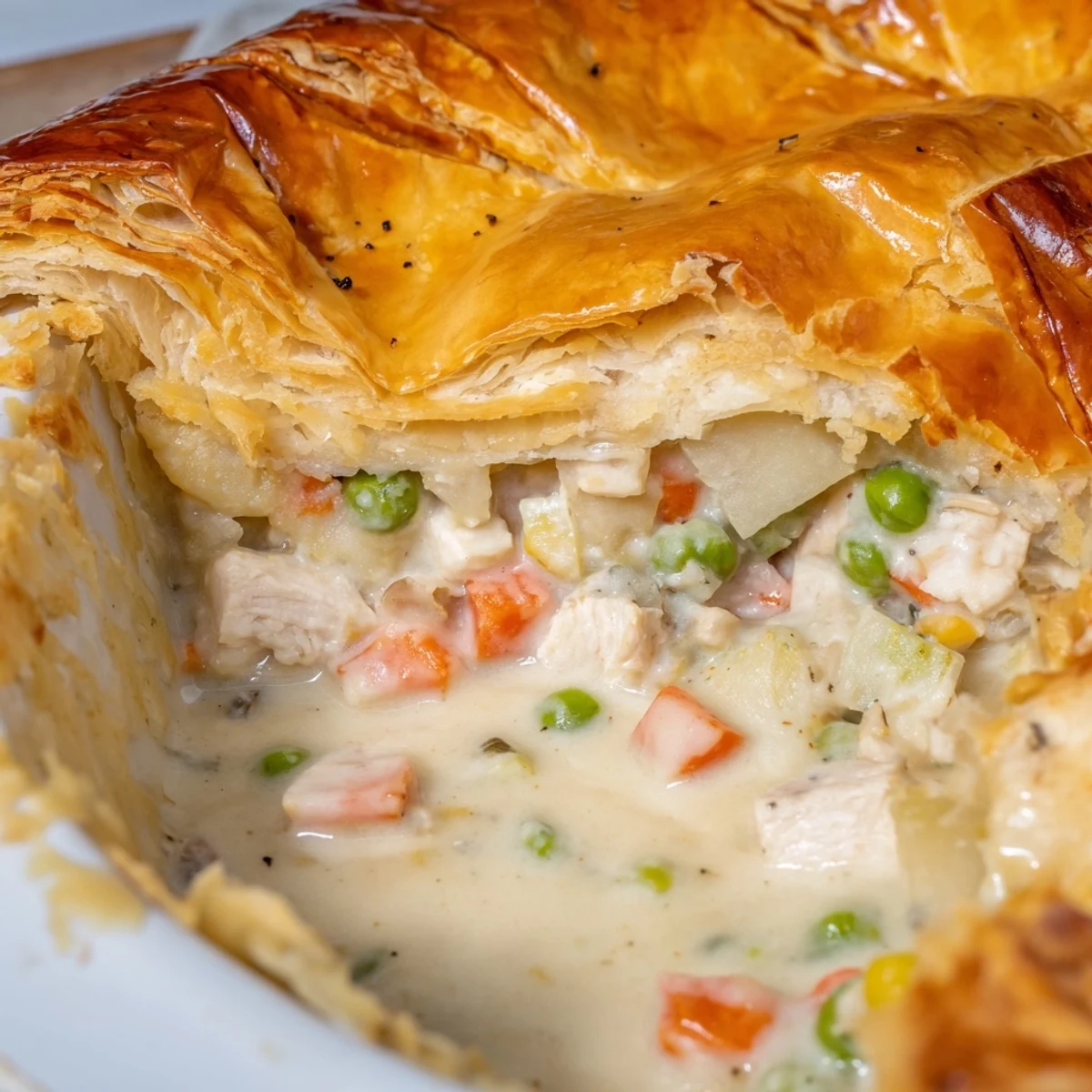
 My neighbor stopped by right as I was pulling this out of the oven, and I could see her face light up at the sound of the crust crackling and the smell of herbs and cream. She asked for the recipe on the spot, and that's when I knew this was the kind of dish worth keeping in your rotation.
Why This Works Every Time
The reason this pot pie reliably turns out golden and delicious is because each element plays a specific role and doesn't interfere with the others. The vegetables cook just enough to soften but not so much that they become soft; the sauce is creamy but not heavy; and the pastry bakes evenly without burning because everything underneath stays warm but doesn't keep cooking. Understanding this balance is what separates a good pot pie from a great one.
Variations Worth Trying
Once you've made this version, you have a framework for endless possibilities depending on what's in your kitchen. Mushrooms add earthiness; fresh thyme instead of dried brings a brighter note; half-and-half instead of milk creates an even richer sauce that clings to the vegetables. I've also added fresh parsley just before serving, diced bacon scattered through the filling, or roasted garlic for depth—each change tells a slightly different story.
Serving Suggestions and Pairings
This pot pie is substantial enough to stand alone, but it benefits from brightness alongside it—a crisp green salad with vinaigrette cuts through the cream perfectly, or roasted vegetables add color to the plate. Serve it warm straight from the oven when the crust is still crackling, pour a glass of white wine if you're inclined, and let everyone break through their own golden crust.
- A simple green salad with lemon vinaigrette balances the richness without overwhelming the flavors.
- Roasted or steamed vegetables on the side add color and fresh texture against the creamy filling.
- This dish freezes beautifully before baking, so you can assemble it and bake it weeks later if you'd like.
 Pin it
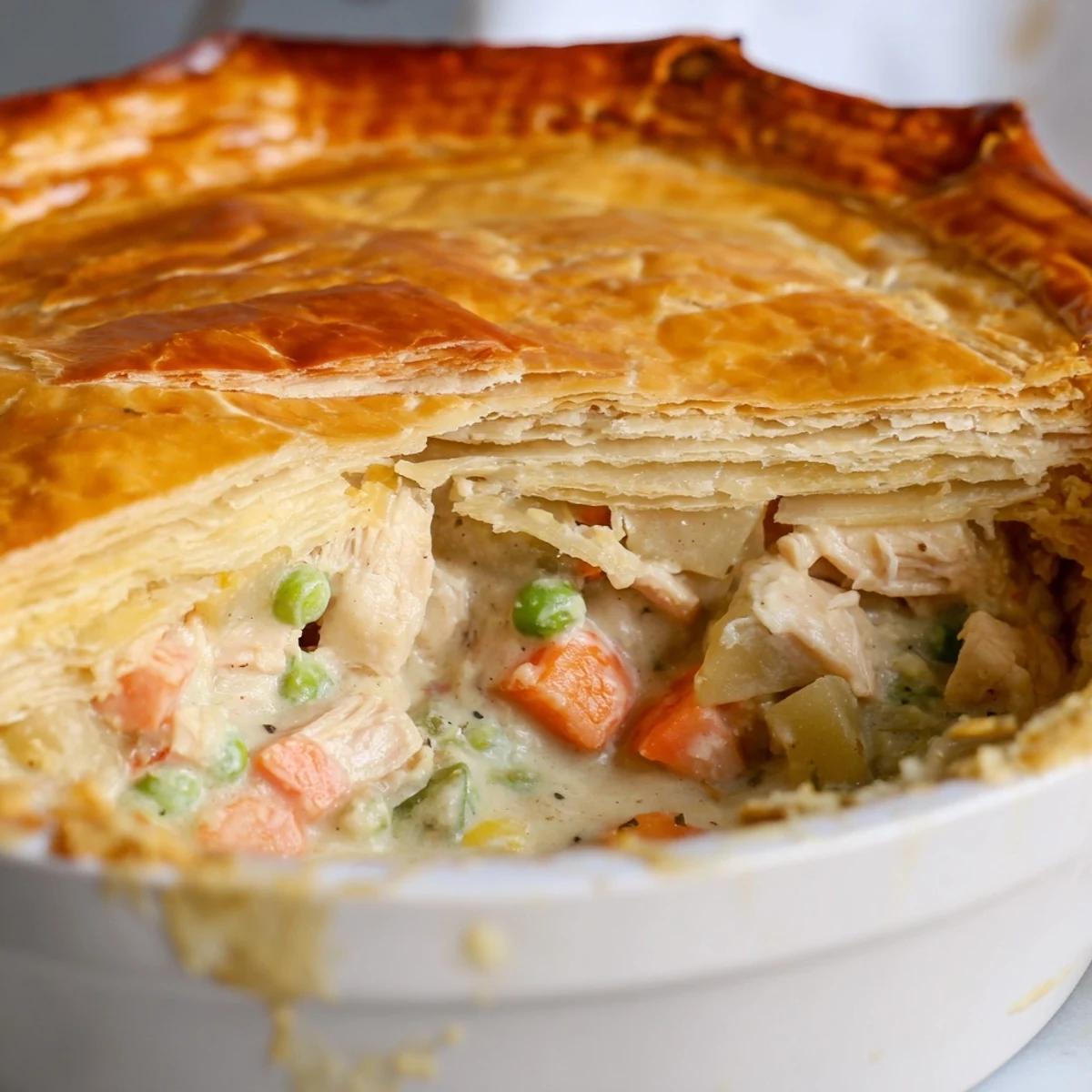
 This pot pie quietly became one of my favorite things to make because it asks so little but gives so much back—comfort in a dish, generosity in a bite. It's the kind of cooking that feels like love made visible.
Common Recipe Questions
- → Can I use chicken instead of turkey?
-
Yes, rotisserie chicken or any cooked poultry works well as a substitute and complements the creamy filling.
- → How is the sauce thickened?
-
The sauce is thickened by cooking flour with butter to create a roux, then gradually whisking in broth and milk until it reaches a creamy consistency.
- → What vegetables are included?
-
This dish includes carrots, celery, peas, potatoes, and onions, providing texture and flavor to the filling.
- → How do I ensure the puff pastry stays crisp?
-
Brush the pastry with beaten egg for a golden finish and bake at a high temperature to keep it flaky and crisp.
- → Can fresh herbs be added?
-
Yes, adding fresh thyme, sage, or other herbs enhances the flavor and freshness of the dish.