
 Pin it
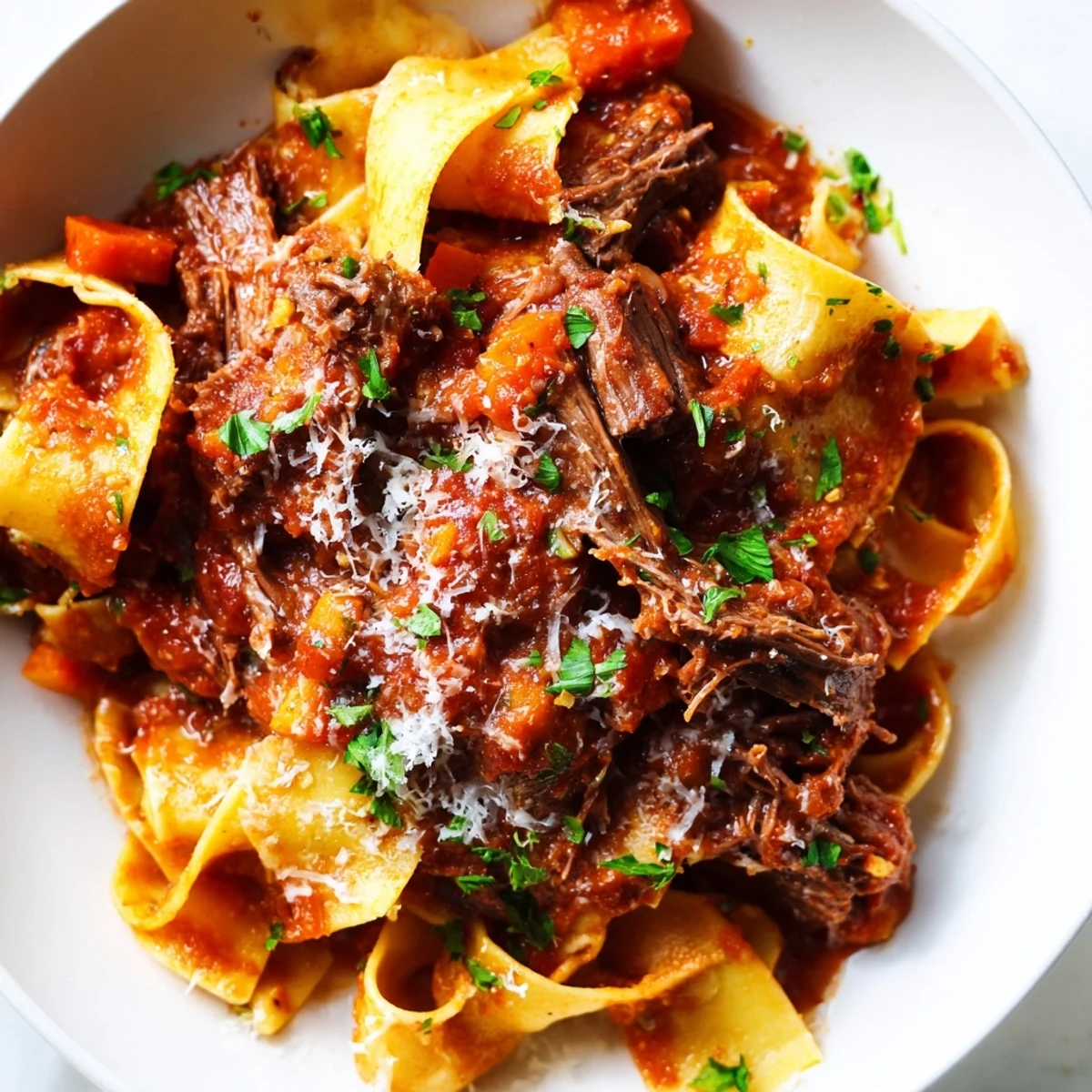
 This slow-cooked beef ragu features tender chunks of beef simmered with aromatic vegetables, herbs, and rich tomato sauce. The long cooking process tenderizes the beef until it can be shredded easily, blending deeply with the savory flavors. Served over silky pappardelle pasta and garnished with fresh parsley and Parmesan, this dish offers a warm, comforting experience perfect for cozy dinners. The balance of herbs and slow-simmered tomatoes creates a rich, robust sauce.
There's something about the smell of beef browning in a hot skillet that makes you stop whatever you're doing and pay attention. Years ago, I learned that slow cooker ragu wasn't just about throwing ingredients together and walking away—it was about building layers of flavor with intention, starting with a proper sear on the meat. That first time I made this, I almost skipped the searing step to save time, but a friend caught me and insisted it mattered. She was right, and now it's the first thing I do.
I made this for my sister's birthday dinner last winter, and I remember her partner asking for the recipe before dessert even came out. The whole table went quiet when the ragu hit the pappardelle—you could see people actually slowing down to taste it properly. That's when I knew this wasn't just a weeknight dinner solution; it was something worth repeating.
Ingredients
- Beef chuck roast (2.5 lbs): This cut has just enough marbling to keep everything tender through eight hours of cooking, and it breaks down into silky shreds without falling apart into dust.
- Olive oil (2 tablespoons): Use something you'd actually taste on bread, because you'll taste it here too.
- Yellow onion, carrots, celery: This trio is the flavor foundation—don't rush chopping them or skip any of them, even if you think you prefer one over the others.
- Garlic (4 cloves): Minced small so it disappears into the sauce and becomes part of the deepness rather than a sharp note.
- Dry red wine (1/2 cup): A wine you'd drink matters more than the price tag—the alcohol burns off but the character stays.
- Tomato paste (2 tablespoons): This concentrated umami bomb gets cooked down first, which unlocks flavors you didn't know were there.
- Crushed tomatoes (28 oz can): San Marzano if you can find them, but honestly any whole peeled tomatoes you crush yourself taste better than whatever's already broken down.
- Beef broth (1 cup): Low-sodium lets you control the salt and prevents the sauce from tasting like a salt lick by hour six.
- Oregano, thyme, bay leaves, sugar, chili flakes: The sugar balances acidity without making anything taste sweet, and the bay leaves are there to be found and removed—don't skip that last step or someone will bite into one.
- Pappardelle pasta (1 lb): Those wide ribbons catch the ragu like shallow boats, which is exactly the point of this dish.
- Fresh parsley, Parmesan cheese: The parsley brightens everything right before it hits your mouth, and the Parmesan melts into the warm sauce and becomes part of the whole experience.
Instructions
- Season and sear the beef:
- Pat the beef chunks dry first—this is the one step everyone skips and then wonders why their sear wasn't brown enough. Get the skillet screaming hot, then lay the chunks in with confidence and let them sit for a solid 2–3 minutes per side without moving them around. You want a dark brown crust, not gray steamed meat.
- Build your soffritto:
- Use the same skillet with all those stuck-on brown bits still clinging to the bottom. The vegetables will pick up every speck of flavor and become the backbone of everything. Cook them until they're soft and the kitchen smells like you're cooking something serious.
- Deglaze and combine:
- That wine in the pan will sizzle and steam, and you'll scrape the bottom with a wooden spoon until every fleck of browned meat is loose and floating. This takes about 2 minutes and feels like you're doing alchemy.
- Layer the slow cooker:
- Tomato paste gets stirred into the hot liquid first so it dissolves smoothly, then everything else follows. Stir it all together and cover, resisting every urge to peek for at least the first hour.
- Let time do the work:
- Eight hours on low means you can go to work, run errands, or just live your life while the slow cooker turns tough meat into something that falls apart with a spoon. The longer it sits, the deeper the flavor becomes.
- Shred and taste:
- After removing the bay leaves, use two forks to break the beef apart—it should require almost no effort. This is when you taste and adjust the seasoning, because some of the salt will have cooked off and you might need more than you think.
- Cook the pasta separately:
- Toss the cooked pappardelle with just a little ragu sauce to coat it lightly, then serve it in a wide, shallow bowl. Top generously with more sauce, fresh parsley, and shards of Parmesan.
 Pin it
 This dish became something more than dinner the night my dad asked me to write down the recipe. He'd been to Italy twice and had opinions about food, so his asking felt like something between respect and surprise. I realized right then that slow cooking isn't laziness—it's patience, and that's a completely different thing.
Why Slow Cookers Change Everything
A slow cooker is honest in a way other cooking methods aren't. You can't throw ingredients at it and hope—the long heat forces you to season properly, brown your meat, and build flavor from the ground up. Everything you do at the beginning matters because it's going to intensify over eight hours. The ragu teaches you that good food isn't rushed or secret; it's just something you started doing right.
The Pasta Matters More Than You Think
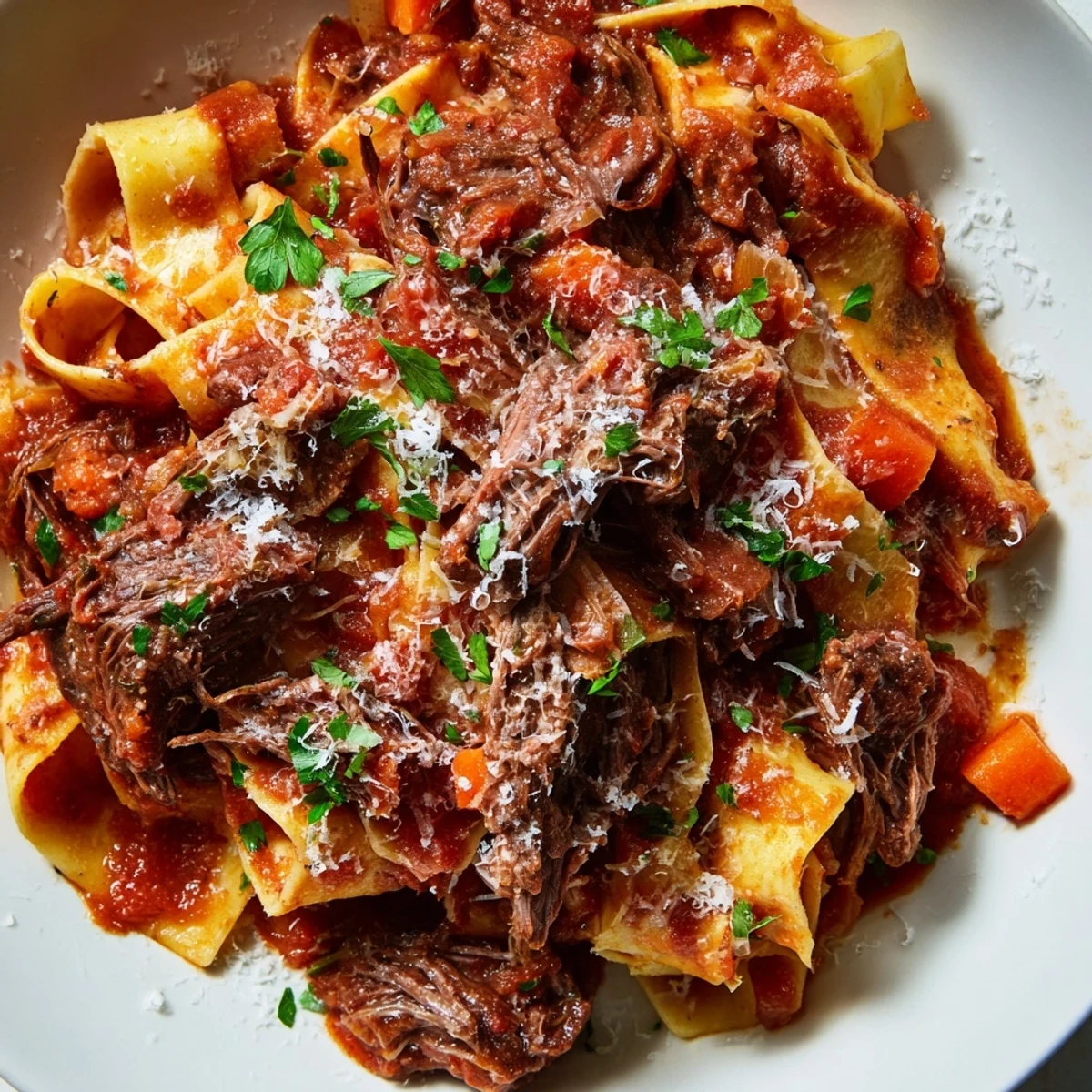
Pappardelle isn't fancy for its own sake. Those wide ribbons create surface area for the sauce to cling to, and they cook faster than thinner shapes so they stay tender and silky. Regular spaghetti will work, but pappardelle was designed for exactly this kind of sauce—thick, meaty, and rich enough to coat every inch without sliding off.
Making It Your Own
This is a template more than a strict formula. You can swap the beef chuck for brisket if you like something leaner, or short ribs if you want more bone flavor. The vegetables can shift slightly depending on what you have on hand, and the wine can be whatever red wine you'd drink with dinner—the ragu doesn't care about the vintage, just the quality of the fruit.
- Make this on a Sunday afternoon and you'll have dinner ready whenever Wednesday gets chaotic.
- The ragu freezes beautifully for up to three months, and it tastes better when you reheat it because the flavors settle and deepen.
- A bold red wine like Chianti or Barolo alongside dinner isn't optional—it's the conversation you're having with the food.
 Pin it
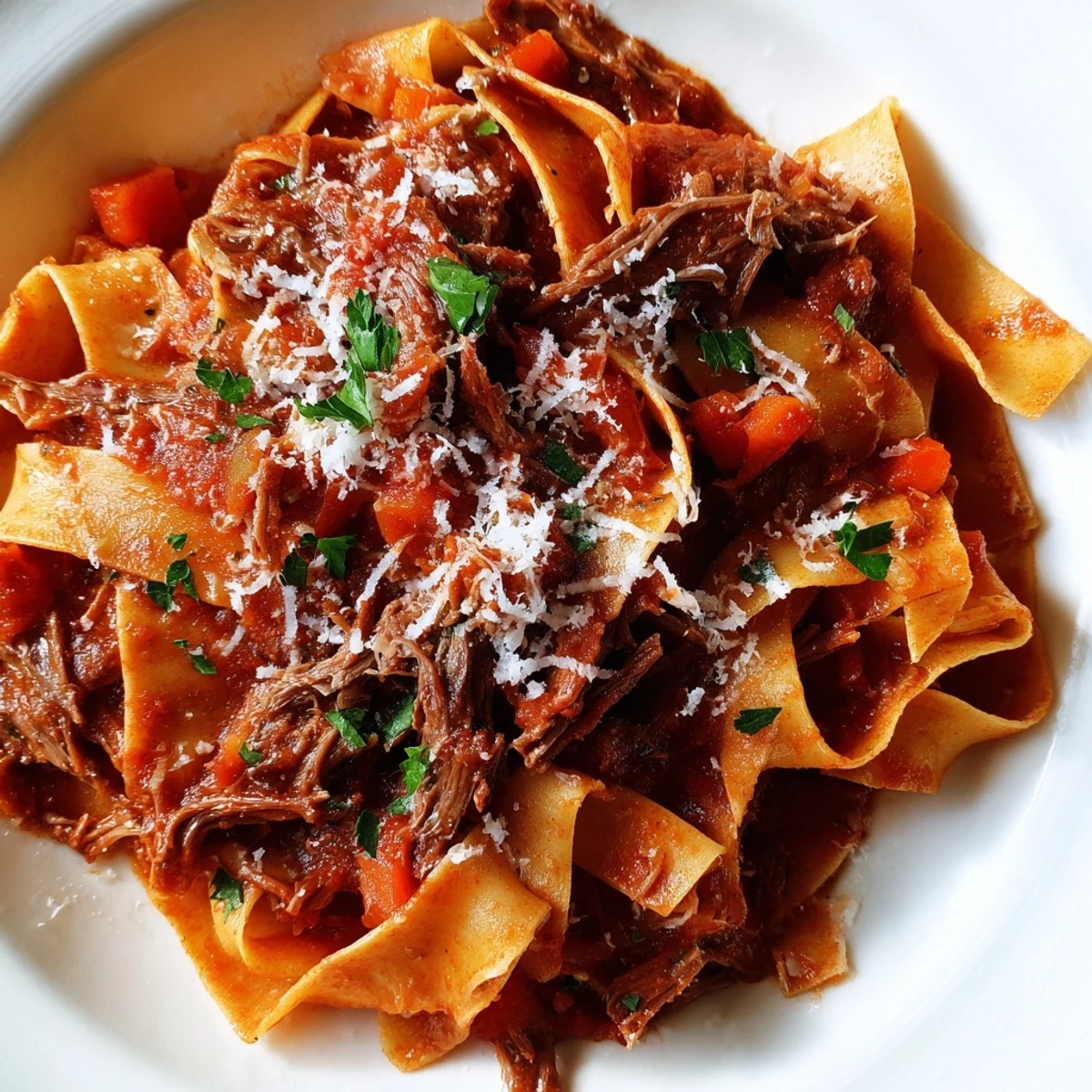
 This ragu has become the dish I make when I want someone to feel taken care of. The eight hours isn't just cooking time; it's proof that you thought ahead and put real care into the process.
Common Recipe Questions
- → What cut of beef works best for this dish?
-
Beef chuck roast is ideal due to its marbling and texture, which becomes tender and flavorful after slow cooking.
- → Can I substitute the pappardelle with another pasta?
-
Yes, other wide or flat pasta such as fettuccine or tagliatelle can be used to hold the rich sauce well.
- → How long should the beef be cooked for optimal tenderness?
-
Cooking on low heat for about 8 hours allows the beef to become very tender and easy to shred.
- → What type of wine complements the flavors best?
-
A bold red wine like Chianti or Barolo enhances the sauce’s depth and pairs well with the beef.
- → Can the ragu be prepared ahead of time?
-
Yes, it can be made 1–2 days in advance; reheating allows the flavors to meld even more.