
 Pin it
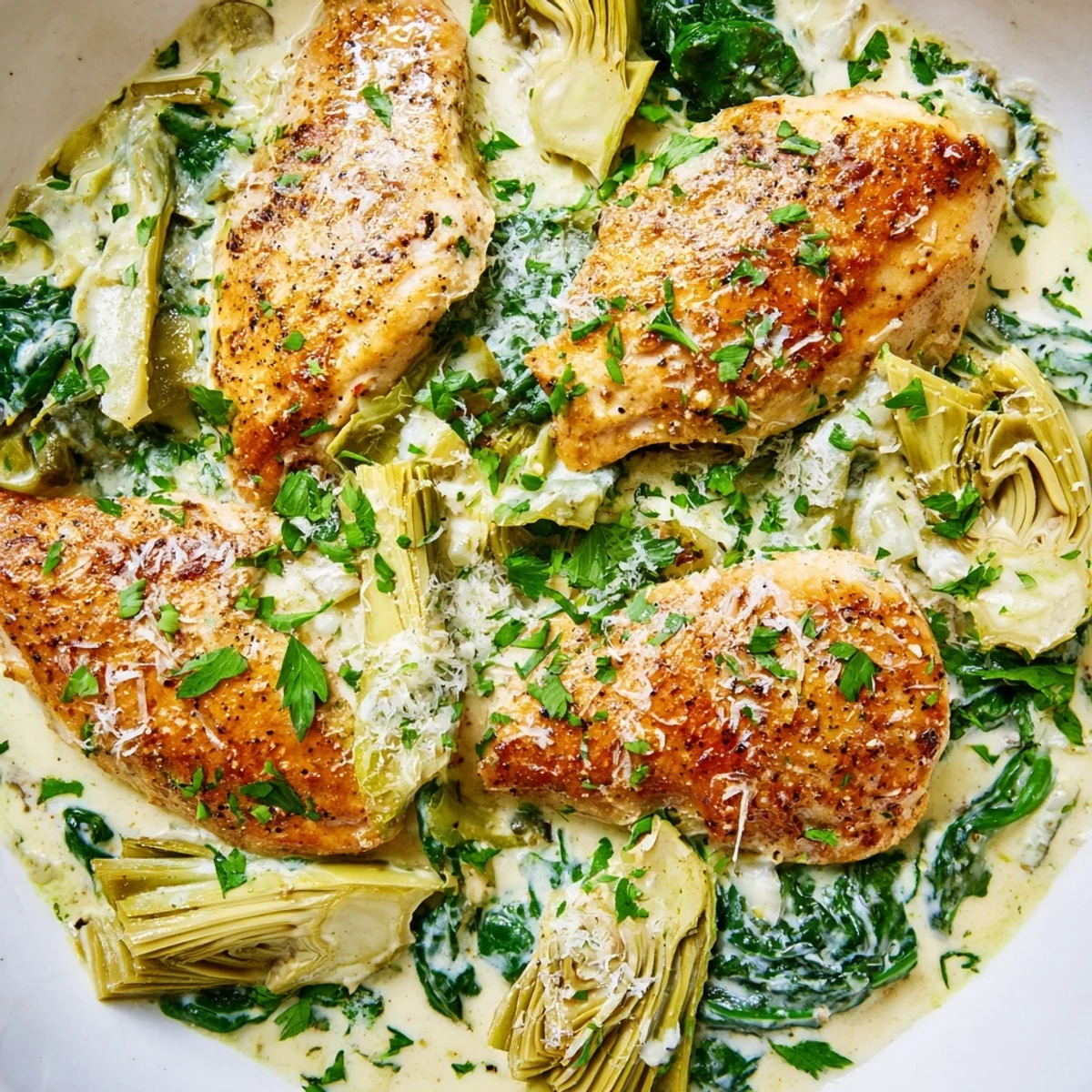
 Sear seasoned chicken until golden, then remove. In the same pan, sauté garlic, spinach, and artichokes. Pour in cream and broth, add parmesan and herbs to make the sauce. Return chicken to simmer until cooked through. Finish with parsley for a rich, flavorful meal.
There's something magical about the smell of garlic hitting hot oil right before you know dinner is going to be good. I stumbled onto this skillet dish on a random Tuesday when I had chicken, cream, and half a bag of spinach that needed rescuing from the back of my fridge. The moment those artichokes hit the pan and started mingling with the garlicky sauce, I knew I'd found something I'd be making over and over.
I made this for my sister the first time she visited after moving into her new apartment, and she sat at my tiny kitchen table with a full plate and just kept saying "this is restaurant quality." That's when I realized this wasn't just a quick dinner solution—it was the kind of dish that makes people feel genuinely cared for.
Ingredients
- Chicken breasts: Pat them completely dry before seasoning so you get that beautiful golden crust, and don't skip the searing step even though you're tempted to.
- Olive oil: Use regular olive oil here, not your fancy extra virgin, since you're cooking at medium-high heat.
- Garlic: Mince it fresh rather than using jarred—those thirty seconds of fragrance filling your kitchen is part of the whole experience.
- Fresh baby spinach: It wilts down dramatically, so don't worry that you're using what looks like way too much.
- Artichoke hearts: Drain them thoroughly and quarter them so they're the right size to nestle into each bite.
- Heavy cream: This is the backbone of the sauce, and it's worth using the real thing rather than trying to substitute.
- Chicken broth: Low-sodium lets you control the salt and keeps the sauce from becoming unbalanced.
- Parmesan cheese: Freshly grated makes a noticeable difference in how the sauce comes together.
- Dried Italian herbs: They bloom in the cream and give the whole dish an understated elegance.
Instructions
- Prep and season your chicken:
- Pat your chicken breasts completely dry with paper towels—moisture is the enemy of a good sear. Season both sides generously with salt and pepper and let them sit for a minute while you get your skillet ready.
- Sear the chicken:
- Heat olive oil in your large skillet until it shimmers, then lay in the chicken breasts and don't move them for a full four to five minutes. You want them to develop a golden-brown crust that tells you they're going to be tender and juicy inside. Flip once and cook the other side until golden, then transfer to a plate.
- Bloom the garlic:
- In that same skillet with all the flavorful browned bits still clinging to the bottom, add your minced garlic and let it sizzle for just thirty seconds. You'll know when it's right because your kitchen will suddenly smell incredible.
- Wilt the spinach:
- Add all that fresh spinach to the garlic and stir gently for about two minutes until it's completely wilted and released its moisture. It looks like a lot at first, but trust the process.
- Add the artichokes:
- Stir in your quartered artichoke hearts and let them warm through for about a minute, getting them coated in all that garlicky goodness.
- Build your sauce:
- Pour in the heavy cream and chicken broth, then use your wooden spoon to scrape up all those browned bits stuck to the bottom of the pan—that's pure flavor. Bring the whole thing to a gentle simmer.
- Finish the sauce:
- Stir in the Parmesan cheese, Italian herbs, and red pepper flakes if you want a whisper of heat. Let it simmer for two minutes while the cheese melts and the sauce thickens just slightly into something luxurious.
- Reunite and finish:
- Nestle your seared chicken breasts back into the sauce and let everything simmer together for four to six minutes until the chicken is completely cooked through and the sauce is clinging to everything beautifully. Top with fresh parsley and a final scatter of Parmesan.
 Pin it
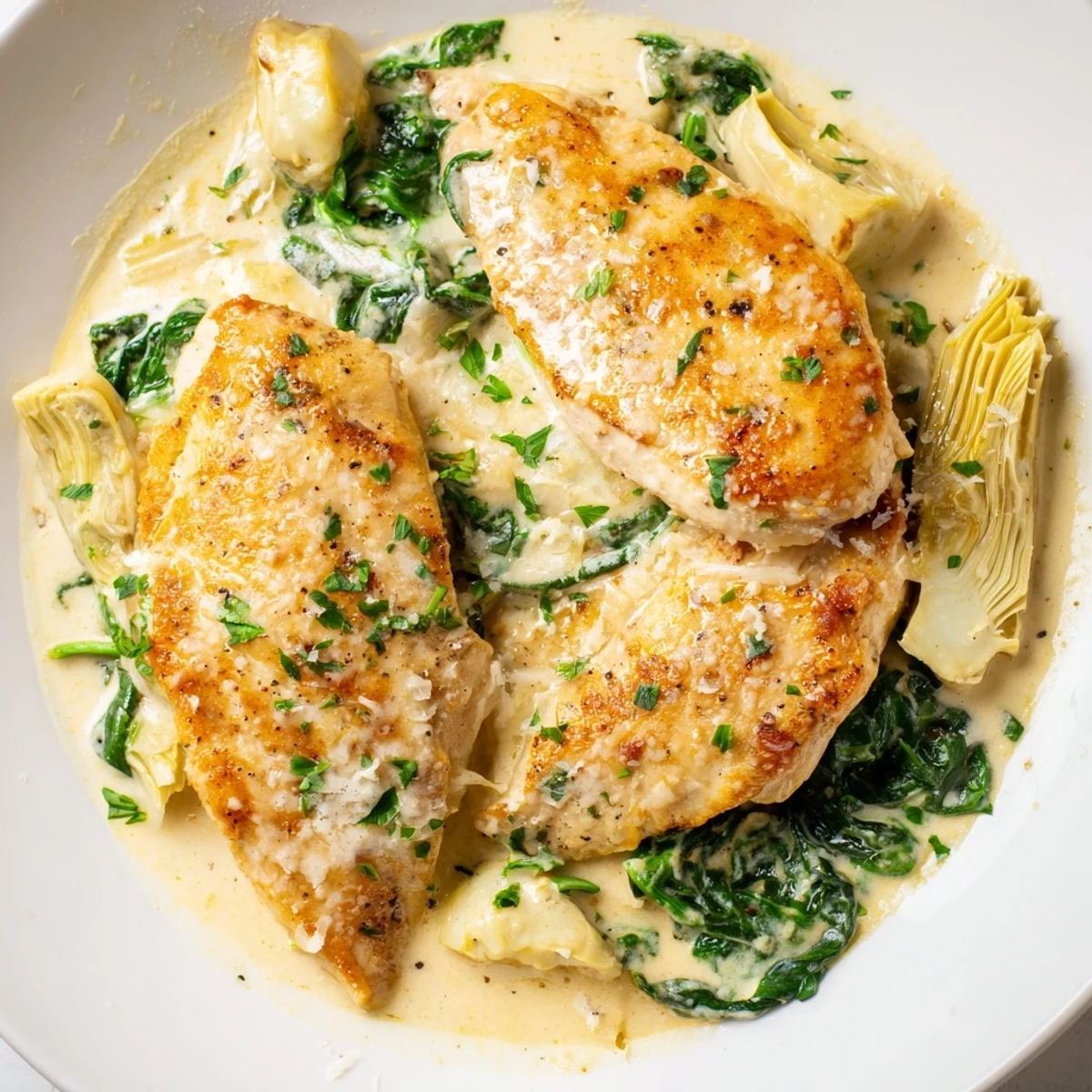
 There's a moment about halfway through the simmer when all the elements just come together and stop being separate ingredients and become this unified, creamy, garlicky dream. That's the moment I always pause and taste the sauce, because that's when you know you've got something worth sitting down to.
Why This Skillet Method Works So Well
The genius of this dish is that everything happens in one vessel, so the chicken releases its juices, the cream soaks up all the seared crust from the pan, and the spinach and artichokes exchange flavors with everything around them. By the time you're ready to serve, you've got this unified flavor profile that feels way more complicated than it actually is.
What to Serve It With
Crusty bread is probably the most satisfying move because you'll want to soak up every drop of that cream sauce. Rice works beautifully too if you want something more substantial, and if you're in the mood for pasta, a simple egg noodle or pappardelle turns this into a completely different kind of comforting.
Making It Your Own
The foundation of this dish is so solid that you can play around with it once you've made it a few times. I've added sun-dried tomatoes for brightness, swapped in kale when spinach felt boring, and once threw in some roasted red peppers because I had them on hand and it was absolutely worth it.
- Fresh thyme can stand in for Italian herbs if that's what you've got, and the flavor shift is subtle but nice.
- A splash of white wine in place of some of the broth adds a sophisticated note that your guests will feel even if they can't name it.
- If you want extra richness, stir in cream cheese with the heavy cream and let it melt into something almost impossibly luxurious.
 Pin it
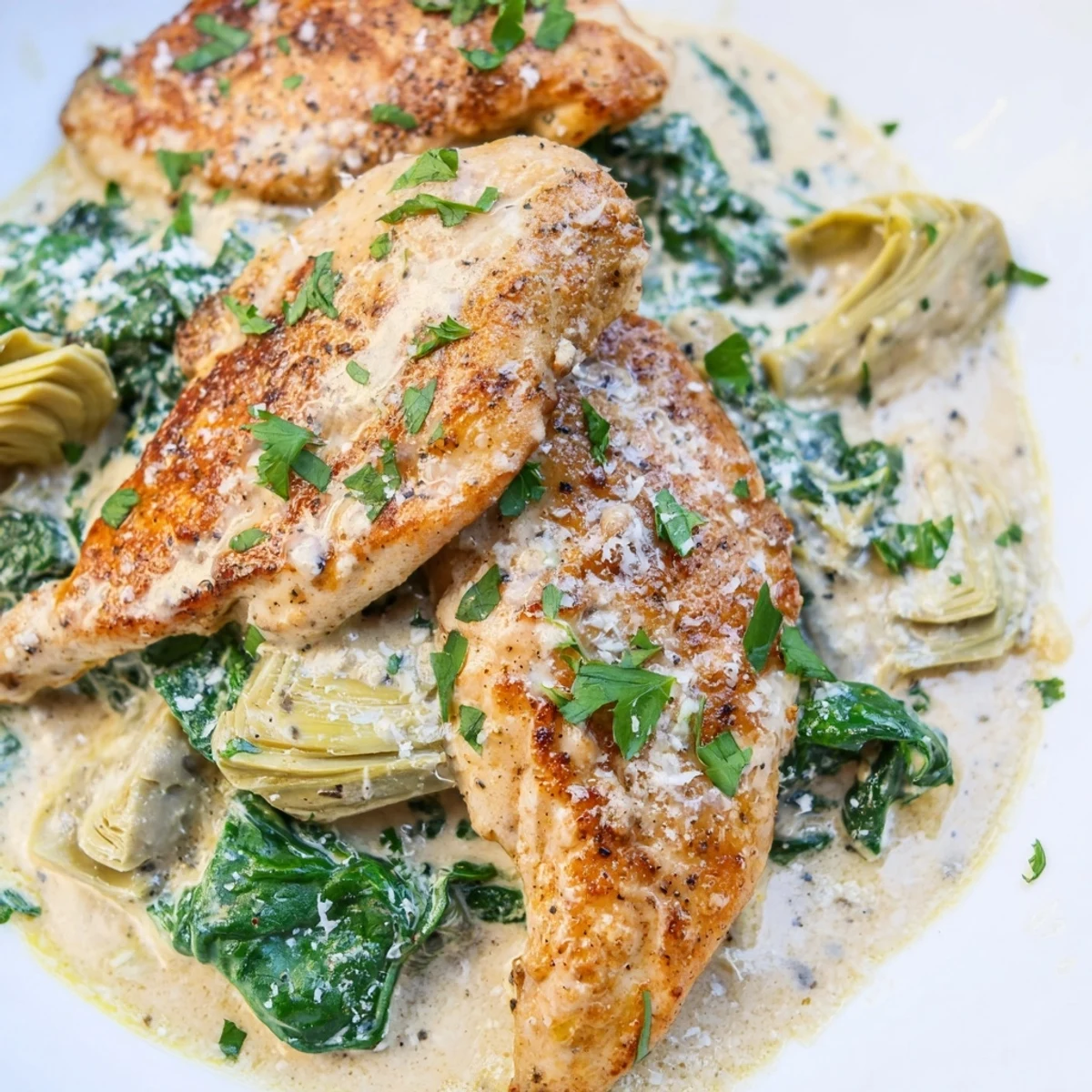
 This is the kind of dinner that tastes like you spent way more time in the kitchen than you actually did. Make it once, and you'll find yourself craving it on the nights when you want something that feels both easy and special.
Common Recipe Questions
- → Can I use frozen spinach instead of fresh?
-
Yes, ensure the spinach is completely thawed and squeezed dry to prevent the sauce from becoming too watery.
- → What can I serve with this skillet?
-
It pairs excellently with crusty bread for dipping, over rice, pasta, or with a side of roasted low-carb vegetables.
- → Can I substitute the heavy cream?
-
While heavy cream provides the best richness, half-and-half can be used for a lighter version, though the sauce will be less thick.
- → How do I know when the chicken is done?
-
The chicken is safe to eat when the internal temperature reaches 165°F (74°C) at the thickest part.
- → Is this dish gluten-free?
-
Yes, as written this dish is gluten-free, but always verify the labels on your chicken broth and parmesan cheese.