
 Pin it
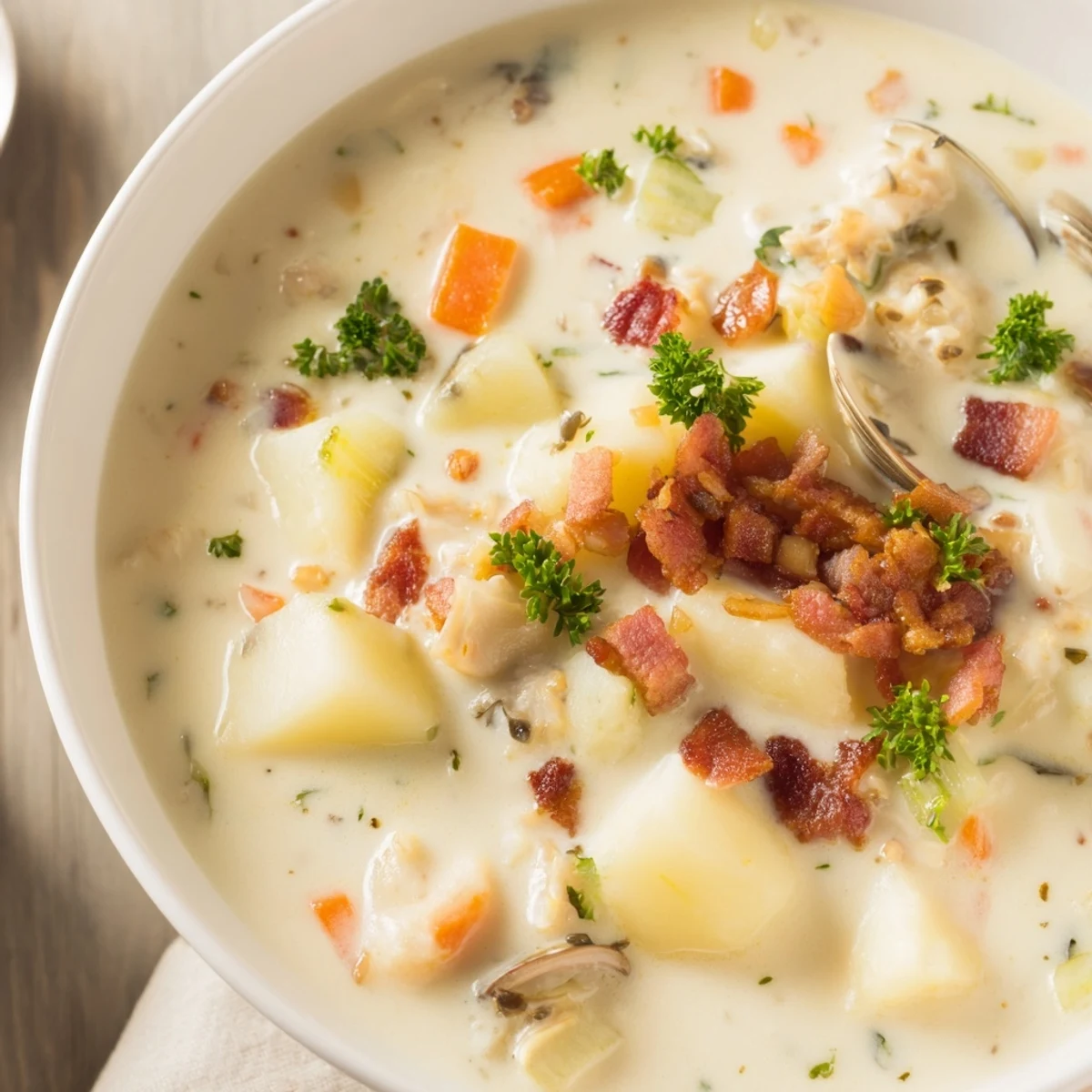
 This creamy chowder blends tender clams with hearty Yukon Gold potatoes, smoky bacon, and sautéed aromatic vegetables. A roux-based broth enriched with cream and milk creates a silky texture, complemented by thyme and fresh parsley for a fragrant finish. Sautéed onions, celery, carrots, and garlic develop deep flavors while clam juice and chicken broth build a savory base. Ideal for warming cold days, it pairs beautifully with crusty bread and crisp white wines.
The first time I made clam chowder, I wasn't trying to recreate some fancy restaurant version—I was just after that feeling of warmth on a gray afternoon, the kind where you want something rich enough to make you forget about the weather outside. A friend had left me a bag of fresh clams from the farmers market, and I remembered my grandmother mentioning that good chowder was really just about taking your time with the vegetables and not being afraid of the cream. That afternoon taught me that the best comfort food doesn't need to be complicated, just honest.
I made this for my sister on the day she moved back to the city, and we sat at my kitchen counter with steaming bowls while she told me about the apartment she'd just rented. Something about the chowder—maybe it was the buttery softness of the potatoes or the sea salt smell—turned that quiet moment into something memorable. She went back three times for more, and I realized that food has this strange power to say things you might not know how to put into words.
Ingredients
- Fresh clams: If you can get them, they're worth the effort—the flavor is briny and clean, and steaming them yourself means you capture all that liquid gold for the broth.
- Bacon: This is where smokiness comes from, so don't skip it or use the thin, limp stuff; get thick-cut bacon that renders down into something special.
- Yukon Gold potatoes: They're buttery on their own and hold their shape without falling apart, which matters more than you'd think.
- Onion, celery, and carrots: This trio is the foundation, so take five minutes to chop them evenly so they cook at the same rate.
- Clam juice and chicken broth: The combination gives you depth without being too one-note fishy.
- Heavy cream and milk: Together they create that luxurious mouthfeel without tasting like you've drowned your soup in cream.
- Butter and flour: This roux is what thickens everything and gives it that silky texture, so don't skip the two minutes of cooking—you'll taste the difference.
Instructions
- Prepare your clams:
- If you're using fresh ones, scrub them under cold water and steam them in a pot with water until they crack open—you'll hear them pop and the kitchen will smell like the ocean. This takes about five to seven minutes; discard any that refuse to open because those are the stubborn ones you don't want.
- Get the bacon going:
- Cook it in your soup pot over medium heat until it's crispy and golden, then pull it out with a slotted spoon. Leave that rendered fat behind because it's liquid gold for flavor.
- Build your flavor base:
- Add butter to the pot and sauté your onions, celery, and carrots for five minutes until they start to soften and smell sweet. Add the garlic and let it cook for just one more minute so it mellows out and coats everything.
- Make the roux:
- Sprinkle flour over the vegetables and stir constantly for two full minutes—this cooking time matters because it removes the raw flour taste and creates the thickening power you need. You'll see it go from flour-dusted to a cohesive, slightly tan mixture.
- Add the liquids:
- Pour in the clam juice slowly while whisking so there are no lumps, then add the chicken broth and bay leaf. Toss in your potatoes and thyme, bring it to a simmer, and let it bubble gently for twelve to fifteen minutes until the potatoes are fork-tender but still holding their shape.
- Finish with the clams:
- Stir in your chopped clams (or canned ones, drained), the crispy bacon, milk, and cream. Keep the heat low here—a gentle simmer for five minutes is enough to marry all the flavors together. If it boils hard, the cream might separate and you'll lose that silky texture.
- Taste and serve:
- Remove the bay leaf, season with salt and pepper to taste, ladle into bowls, and finish with a scatter of fresh parsley. Serve it hot with oyster crackers or crusty bread for soaking up every last drop.
 Pin it
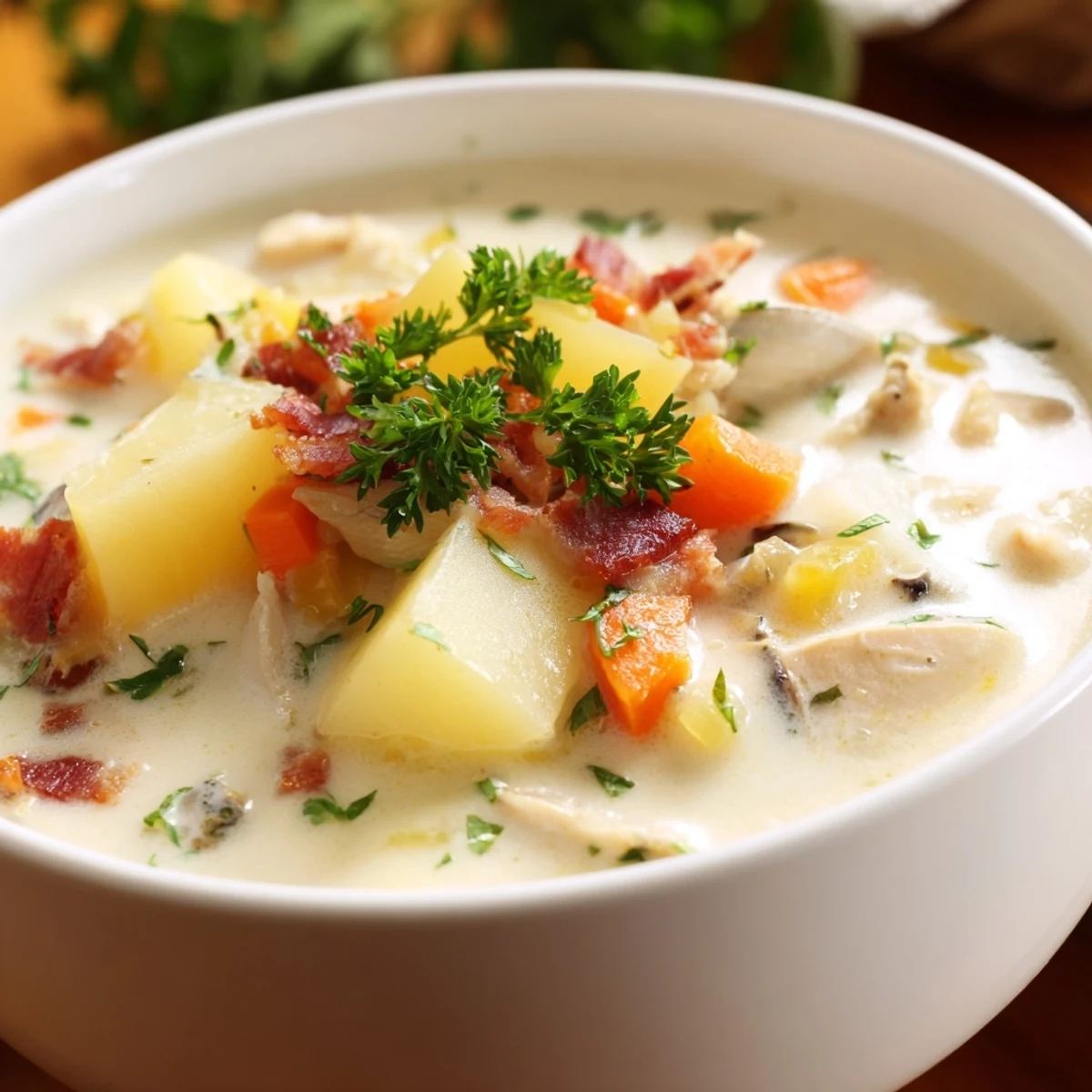
 There's something about serving a bowl of clam chowder that shifts how people sit around a table—they quiet down, lean in, and just eat. It stops being about conversation and becomes about the moment, and I've learned that's when food has done its job right.
Fresh vs. Canned Clams: Which Way to Go
Fresh clams are absolutely worth finding if you can, because steaming them yourself means the broth tastes like actual ocean instead of like a bottle. But canned clams will work just fine if that's what you have on a Tuesday night when you're craving this soup—just make sure you're using the ones that come with juice, and drain them into a separate container so you don't lose any of that liquid. I've made this both ways, and while fresh is prettier and tastes a tiny bit cleaner, canned is more forgiving and gets you to dinner faster.
How to Know When It's Done
The chowder is ready when the potatoes are tender enough to break with the edge of your spoon, the color has shifted to a creamy pale gold, and it coats the back of the spoon when you lift it. If it looks too thin, you can let it simmer a minute or two longer, but remember that it continues to thicken as it cools, so don't overdo it.
Variations and Twists
Once you've made this version a few times, you'll start to see where you can make it your own. Some people like to add a splash of white wine or a teaspoon of Old Bay seasoning for extra depth, and others swear by a pinch of smoked paprika stirred in at the end. You could also lighten it by using half cream and half whole milk if you want something less heavy, or add some corn in the last few minutes if that's what appeals to you on any given day.
- Smoked bacon or pancetta adds complexity that regular bacon can't quite reach.
- A splash of dry white wine whisked in with the broth brings brightness that cuts through the richness.
- Oyster crackers or crusty bread isn't optional—it's your vehicle for getting more chowder into your mouth.
 Pin it
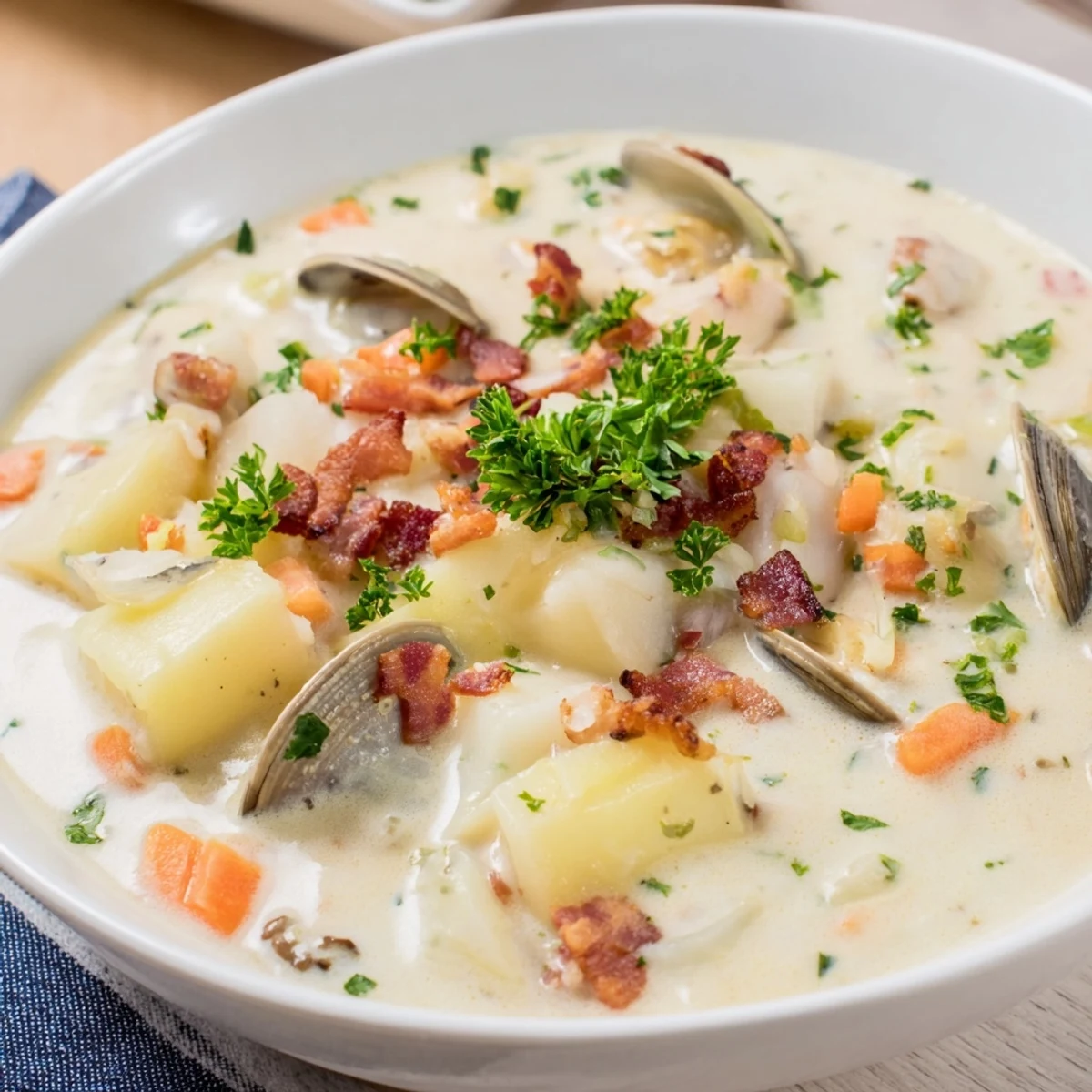
 This chowder is the kind of dish that reminds you why cooking for people matters, why slowing down over a bowl of soup can feel like an act of kindness. Make it when someone needs comfort, or when you just need to feel like home for an afternoon.
Common Recipe Questions
- → How do I prepare fresh clams for the chowder?
-
Scrub fresh clams well, then steam in water until they open (5-7 minutes). Discard unopened clams, reserve the cooking liquid, and chop the clam meat finely.
- → Can canned clam juice be used?
-
Yes, canned clam juice can substitute reserved liquid but check labels for allergens or additives to ensure quality.
- → What thickening method is used here?
-
A roux made from butter and all-purpose flour is cooked with vegetables, then liquids are whisked in to thicken the chowder base gently.
- → How can I make the chowder lighter?
-
Replace half of the heavy cream with whole milk to lighten the texture without sacrificing creaminess.
- → What are good pairings for this chowder?
-
This chowder pairs well with oyster crackers, crusty bread, and crisp white wines like Sauvignon Blanc or unoaked Chardonnay.
- → Is bacon essential to the dish?
-
While bacon adds smoky depth, smoked pancetta can be used as an alternative for a similar flavor profile.