
 Pin it
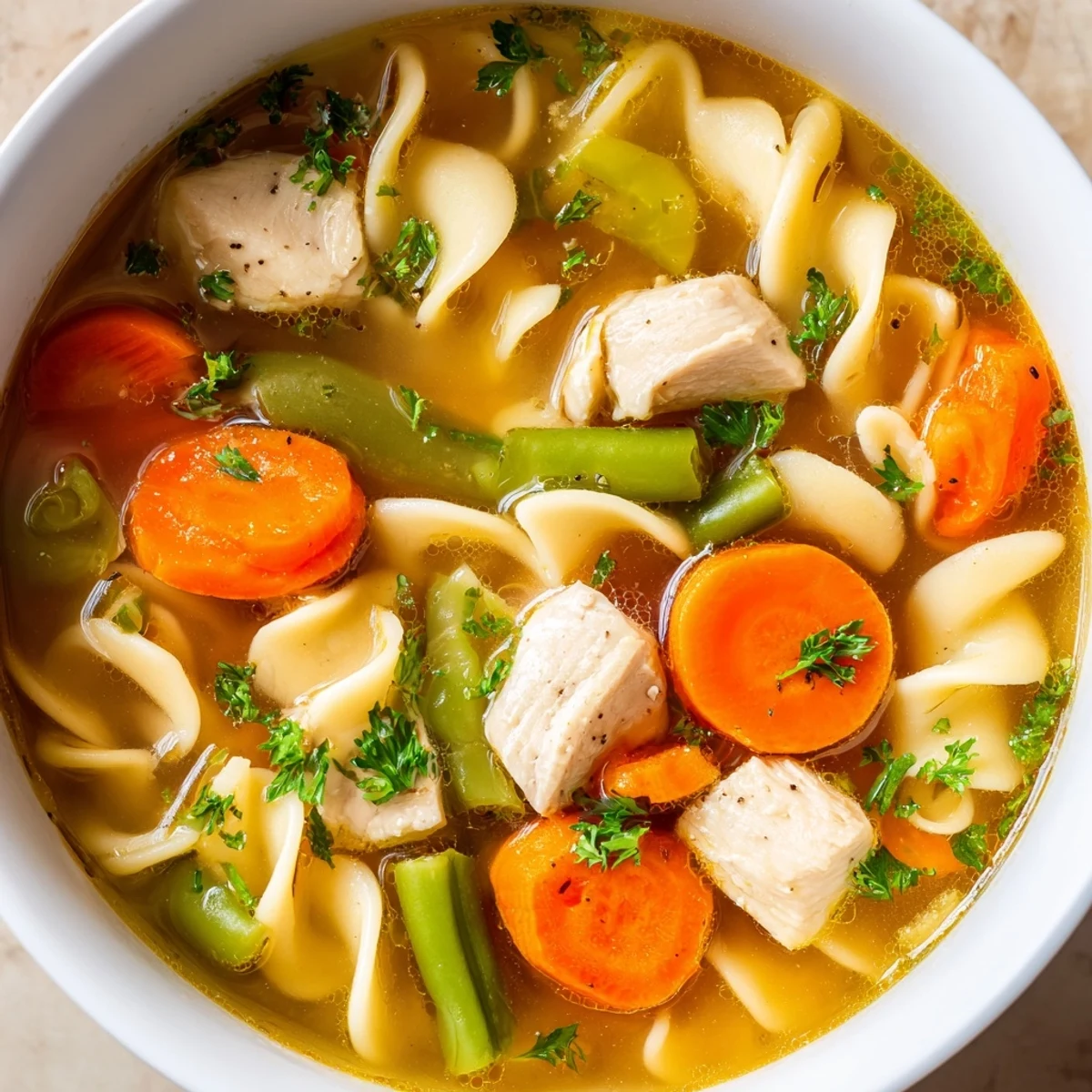
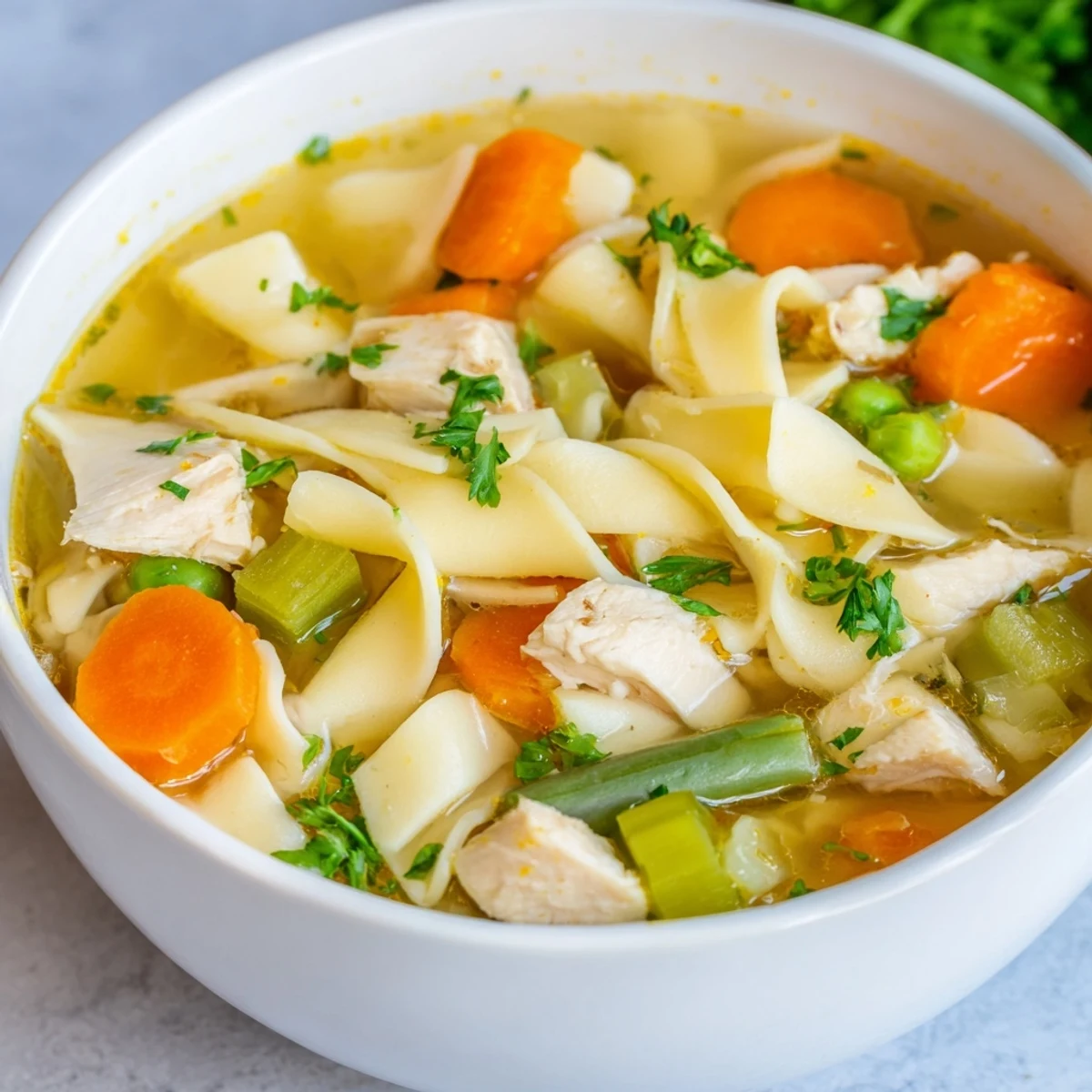
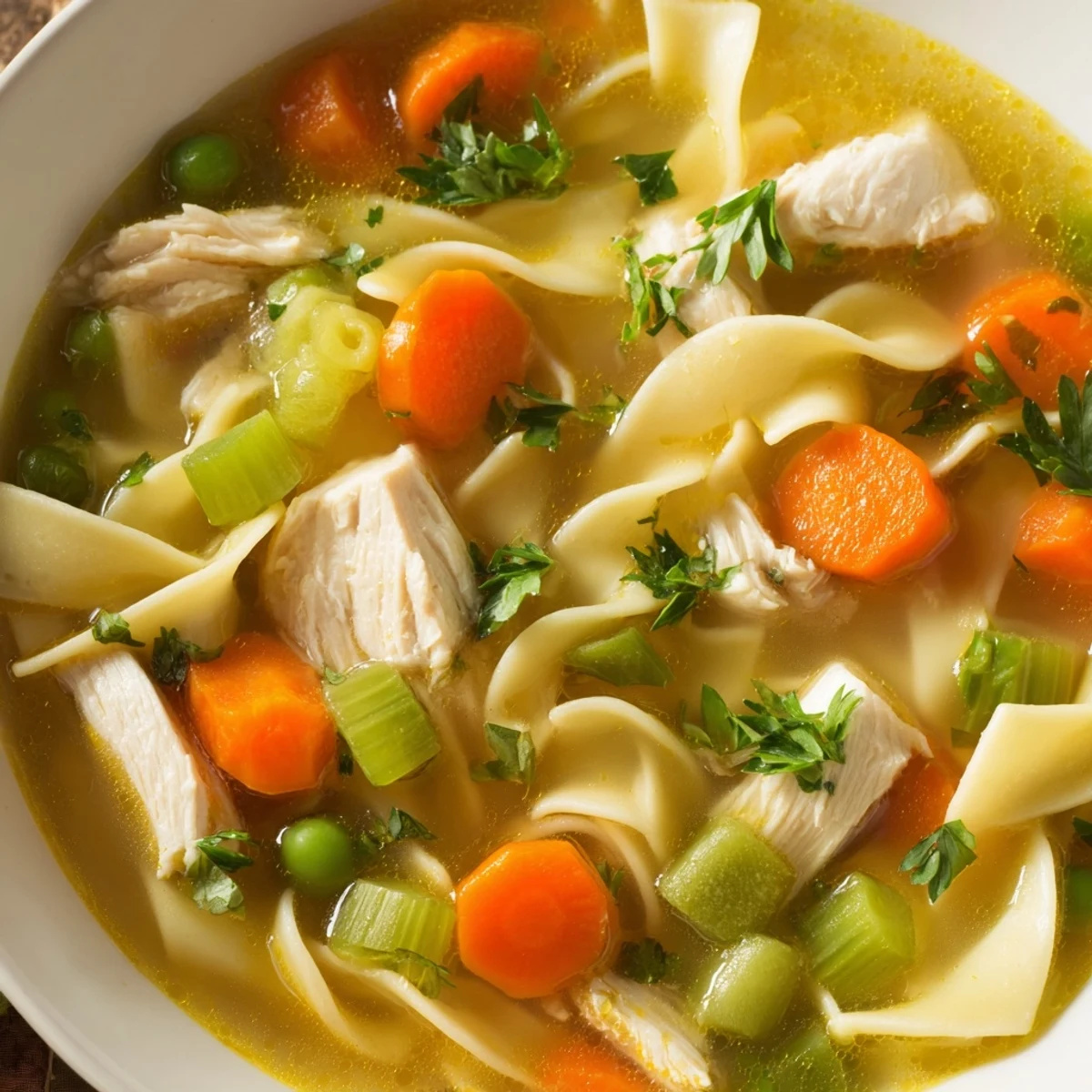
 This hearty dish features diced chicken breasts simmered with fresh carrots, celery, onions, and green beans. Aromatic herbs like thyme and parsley enhance the broth’s rich flavor. Tender egg noodles and peas complete the medley, creating a warm and satisfying bowl perfect for cozy gatherings or weeknight dinners. A squeeze of lemon adds brightness, while optional parsley garnish lends a fresh touch. Easy to prepare and naturally nourishing, it offers a balanced mix of protein, vegetables, and carbs.
My grandmother used to say that a proper chicken noodle soup could heal almost anything, and I spent years thinking she was being sentimental until one particularly exhausting week, I found myself standing in my kitchen at 6 p.m. with nothing but chicken breasts, carrots, and pantry staples. Forty minutes later, that simple pot of broth and vegetables had transformed my entire evening—suddenly everything felt manageable again. Now I understand what she meant: it wasn't magic, just the quiet comfort of something warm and honest.
I made this for my neighbor on a grey Tuesday when she'd just gotten home from the hospital, and watching her face soften as she tasted the first spoonful—really tasted it—reminded me why simple food matters so much. She came back two days later just to ask for the recipe, and I realized the power wasn't in complexity but in that unmistakable flavor of care.
Ingredients
- Chicken breasts: Two boneless, skinless breasts diced into bite-sized pieces—they cook quickly and stay tender if you don't overthink it.
- Carrots: Two medium ones, peeled and sliced into thin rounds so they soften into the broth and sweeten it naturally.
- Celery: Two stalks sliced thin, the foundation of flavor that nobody notices until it's missing.
- Onion: One medium onion finely chopped; this is where the depth begins, so don't rush this step.
- Garlic: Two minced cloves added after the softer vegetables because raw garlic can turn bitter if it sits too long in heat.
- Green beans: One cup trimmed and cut into two-centimeter pieces, adding texture and a brightness that balances the richness.
- Frozen peas: One cup, which thaw in the final minutes and taste fresher than you'd expect from frozen.
- Chicken broth: Eight cups of low-sodium broth—the quality here matters more than anywhere else, so taste it first if you can.
- Egg noodles: About 150 grams of wide noodles, which catch the broth beautifully and don't disappear into mush.
- Olive oil: Two tablespoons for sautéing without burning, just enough to coat the vegetables.
- Bay leaf: One leaf that infuses the broth with subtle earthiness and should be removed before serving, or your guests will find it.
- Dried thyme and parsley: One teaspoon each, though fresh parsley at the end wakes the whole bowl up.
- Black pepper and salt: Half teaspoon of each to start, then you'll taste and adjust because every broth is different.
- Lemon juice: From half a lemon squeezed in at the end, optional but highly recommended for brightness.
- Fresh parsley for garnish: A handful chopped and scattered on top, turning a bowl into something that looks like you meant it.
Instructions
- Build the flavor base:
- Heat olive oil in a large pot over medium heat and add the chopped onion, carrots, and celery together. Listen for the gentle sizzle and let them soften for about five minutes, stirring occasionally so nothing catches on the bottom—you'll smell when they're turning sweet and tender.
- Wake up the garlic:
- Add minced garlic and cook for just one more minute until the kitchen smells alive and aromatic. This quick step prevents the garlic from overcooking and turning acrid.
- Brown the chicken:
- Stir in your diced chicken pieces and let them sit for three to four minutes, stirring gently until the outside loses its raw appearance but the inside is still pale. You're not cooking it through yet, just giving it color and flavor.
- Pour in the broth:
- Add all eight cups of chicken broth along with the bay leaf, thyme, salt, and pepper. Increase the heat until you see gentle bubbles breaking the surface, but don't let it roll into a hard boil—chicken can toughen if shocked.
- Simmer the green beans:
- Reduce the heat to medium-low, add the green beans, and let everything simmer uncovered for fifteen minutes. The kitchen will fill with an incredible savory aroma as the chicken finishes cooking through and the vegetables release their sweetness.
- Add the noodles and peas:
- Stir in the dry noodles and frozen peas, and simmer for eight to ten minutes more, stirring occasionally so the noodles don't stick together. Taste a noodle after eight minutes—they should be tender but still with a whisper of texture, not soft enough to break apart.
- Season and finish:
- Remove the bay leaf, taste the broth, and adjust salt and pepper to your preference. If you want brightness, squeeze in the lemon juice and watch how it lifts everything at once.
- Serve with presence:
- Ladle the soup into bowls and scatter fresh parsley over the top. The green against the golden broth looks intentional and tastes like you've given this some thought.
 Pin it
 One Sunday, my eight-year-old asked why this soup was her favorite and couldn't articulate it beyond 'it just feels like home,' which is exactly when I realized that some recipes aren't about impressing anyone—they're about being the dish someone asks for when they need to feel taken care of. That's when food becomes memory.
Why This Soup Works
There's a simplicity here that belies how much is actually happening in the pot. The aromatics from the onion, celery, and carrot are doing the heavy lifting, while the broth carries everything without demanding attention. The chicken stays tender because it's never rushed, and the noodles soak up just enough broth to taste rich without making the whole thing stodgy.
Variations and Flexibility
This soup is genuinely forgiving about substitutions and additions because the base is strong enough to support them. I've added corn in summer, diced potatoes in winter, and once threw in spinach when I found it wilting in the crisper drawer—it all worked because the broth was seasoned properly from the start. Think of the recipe as a foundation rather than a directive.
Making It Your Own
The lemon at the end is optional but shifts the entire character of the soup from comforting to bright, so taste it once without and once with to see what your mood calls for. Fresh herbs scattered on top feel like a small gesture, but they're what transform a weeknight dinner into something intentional. You can make this dairy-free with confidence, and for gluten concerns, simple egg noodle swaps work beautifully.
- Keep the lid off while simmering so the broth stays clear and doesn't become cloudy from condensation dripping back in.
- If you're making this ahead, add the noodles fresh right before serving or they'll soften too much and fall apart.
- Taste as you go, especially with salt, because the broth will concentrate slightly as it simmers.
 Pin it
 This is the soup I return to when I want to feed someone without fanfare or fuss, when I want to make something that tastes like it came from somewhere real. Make it for yourself first so you know exactly how it should taste, then make it for people you care about.
Common Recipe Questions
- → Can I use gluten-free noodles in this dish?
-
Yes, gluten-free noodles can easily substitute regular egg noodles without compromising texture or flavor.
- → What herbs enhance the flavor of this broth?
-
Dried thyme, parsley, and bay leaf provide a fragrant and savory depth to the broth.
- → How should the chicken be prepared before cooking?
-
Chicken breasts are diced and lightly browned before simmering to lock in moisture and flavor.
- → What vegetables are included and how are they prepared?
-
Carrots, celery, onions, green beans, and peas are used, all chopped or sliced to cook evenly and release natural sweetness.
- → Can this be made dairy-free?
-
Absolutely. This dish contains no dairy ingredients, making it suitable for dairy-free diets.
- → Is it possible to add other vegetables?
-
Yes, vegetables like corn or diced potatoes can be added to diversify flavors and textures.