
 Pin it
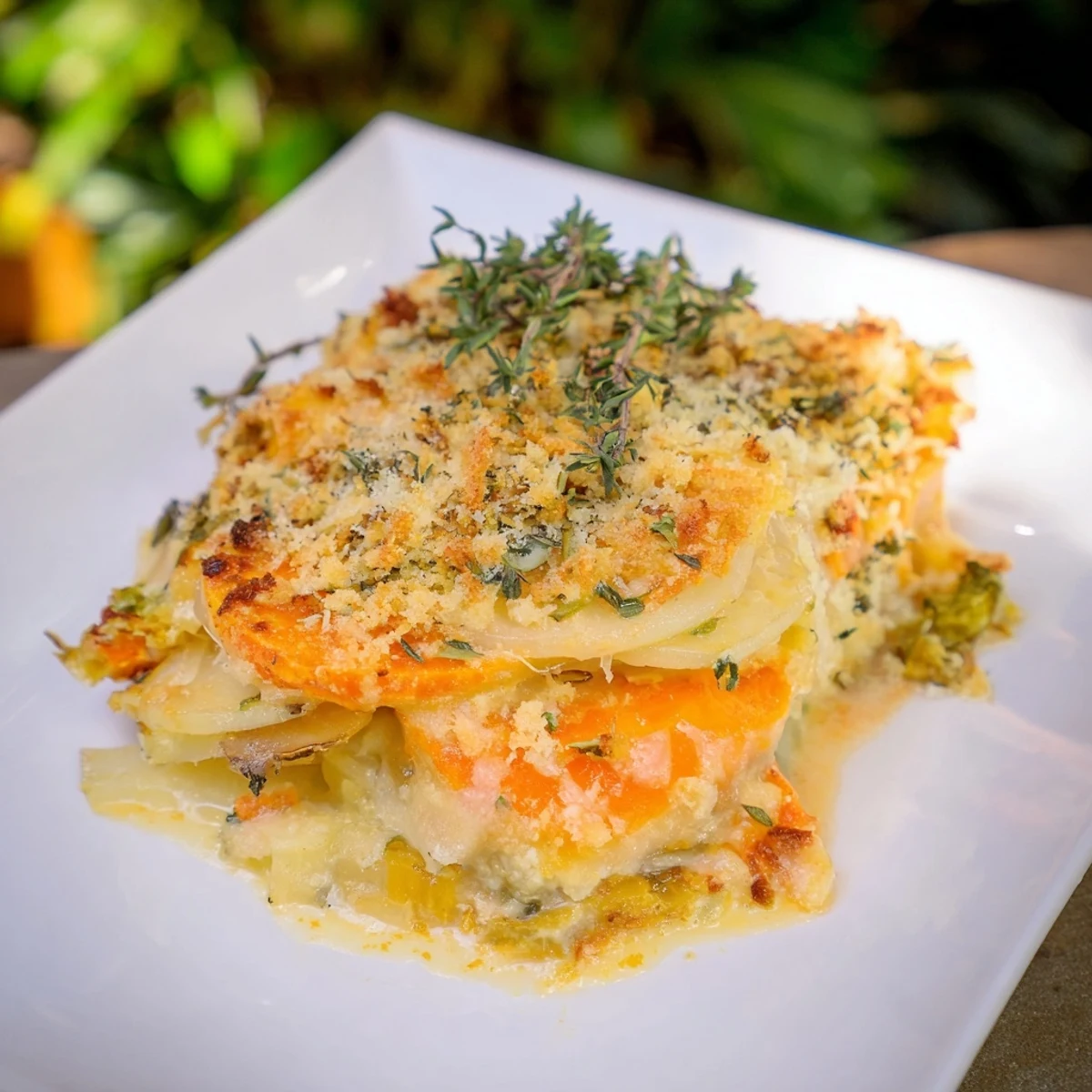
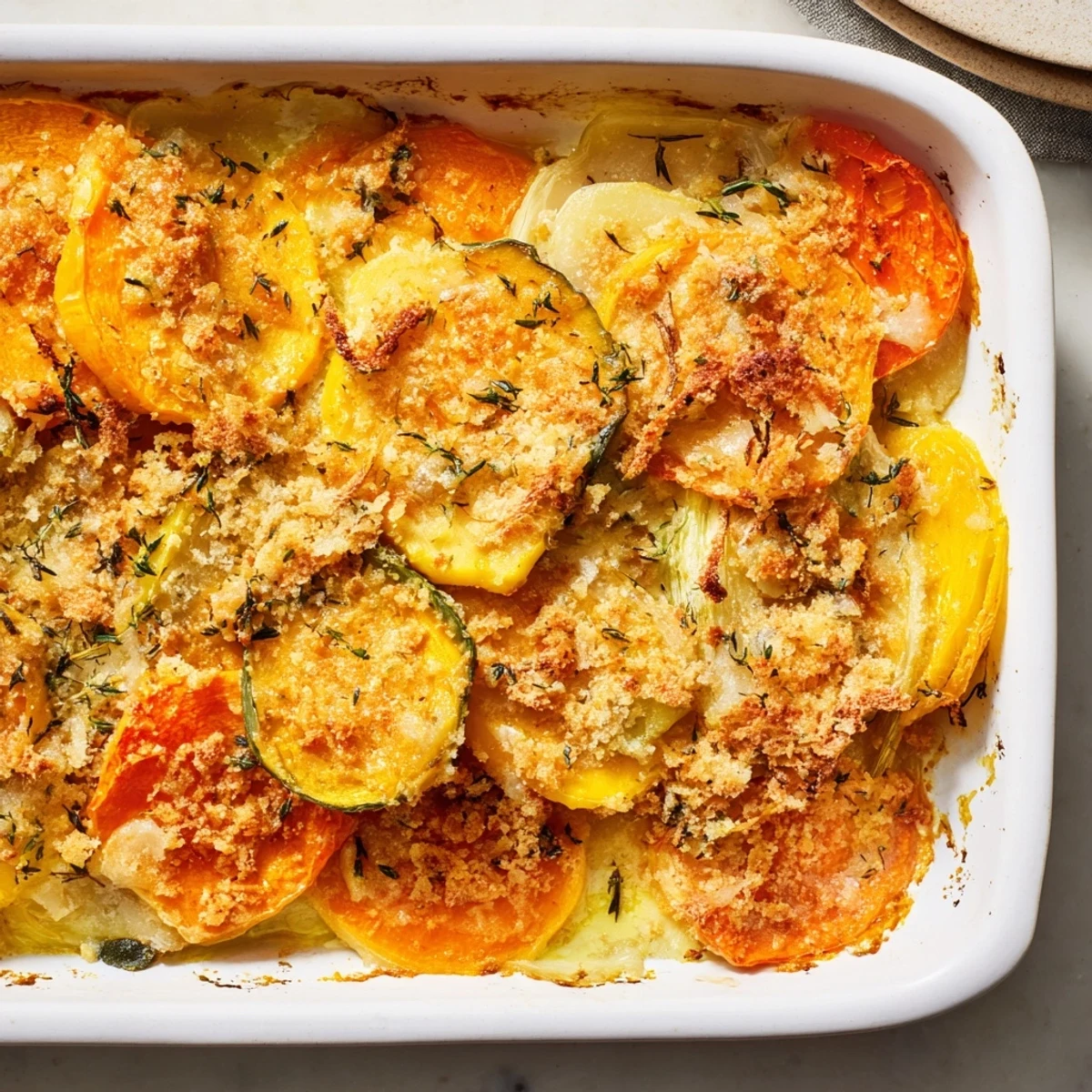
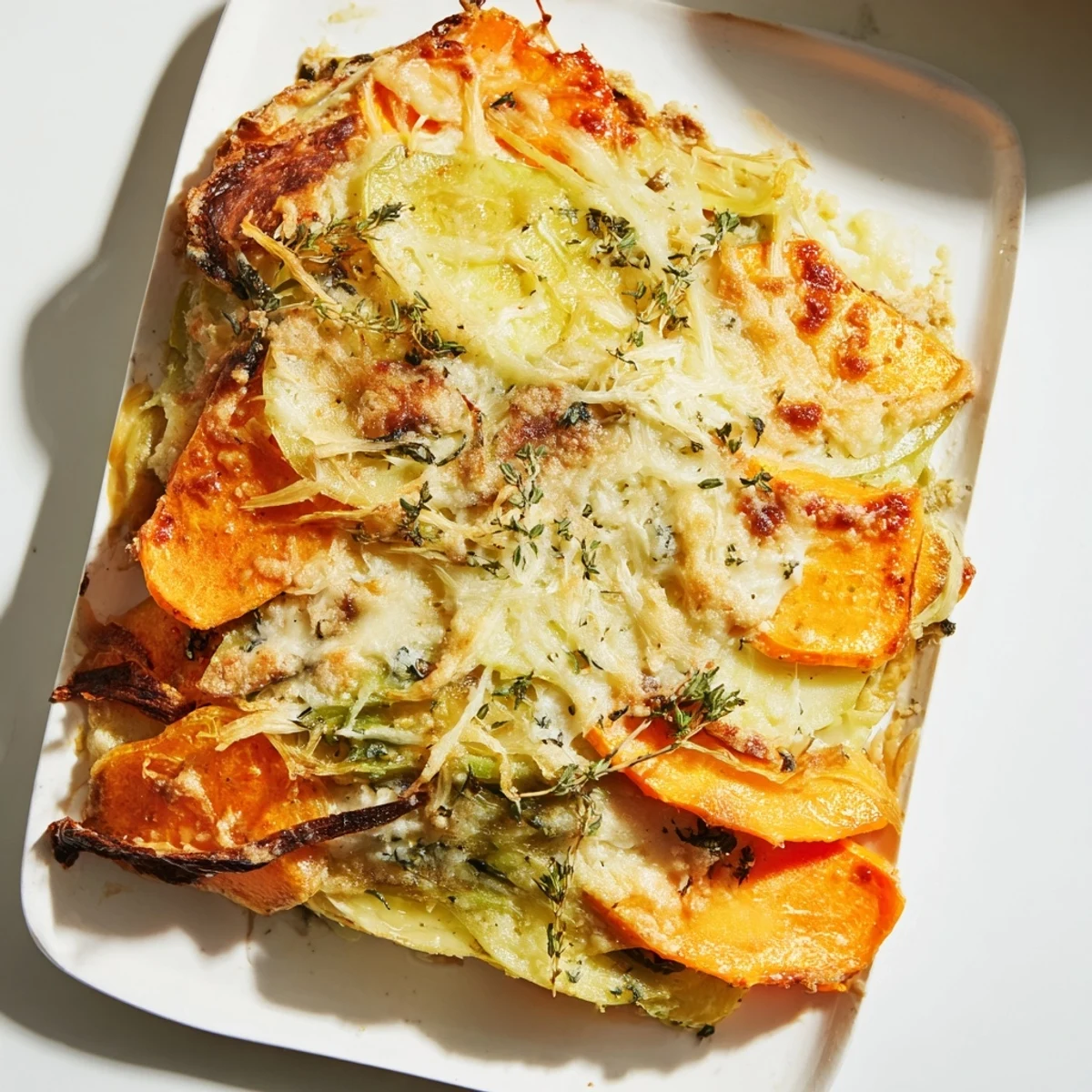
 This gratin highlights thinly sliced winter vegetables like butternut squash, parsnips, potatoes, and leeks layered with a creamy milk and cream sauce flavored by nutmeg, salt, and pepper. Generous amounts of Gruyere cheese create a rich, nutty character, topped with a crisp breadcrumb mixture including Parmesan and fresh thyme. Baked until bubbly and golden, it serves as a hearty main or elegant side. Suitable for vegetarian diets with gluten-free options available.
I started making this gratin on Sunday afternoons when the farmers market had more root vegetables than I knew what to do with. The kitchen would fill with nutmeg and browned butter while snow piled up outside. It became the dish I'd make when I wanted the house to smell like something worth coming home to.
The first time I served this, my neighbor asked if I'd ordered catering. I laughed because I'd been in my pajamas an hour earlier, slicing vegetables with a dull knife. She took home half the pan and I realized this was the kind of recipe that made you look like you tried harder than you did.
Ingredients
- Butternut squash: Its natural sweetness caramelizes under the broiler, and I learned the hard way that thinner slices cook more evenly than thick wedges.
- Parsnips: They add an earthy, almost peppery note that balances the cream, and they're surprisingly easy to slice if you cut them in half lengthwise first.
- Yukon Gold potatoes: These hold their shape better than russets and their buttery flavor doesn't disappear under the sauce.
- Leeks: I only use the white and pale green parts because the dark tops turn bitter, and I always soak the slices in cold water to get rid of any hidden grit.
- Unsalted butter: It forms the base of the sauce, and using unsalted means you control exactly how much salt goes into the dish.
- All-purpose flour: This thickens the sauce into something that coats the back of a spoon without turning gluey, and gluten-free blends work just as well if you need them.
- Whole milk and heavy cream: Together they make a sauce that's rich but not so heavy you feel weighed down, and I've tried half-and-half but it doesn't brown as nicely.
- Ground nutmeg: A small amount warms the whole dish without announcing itself, and freshly grated tastes sharper and brighter than the pre-ground kind.
- Gruyere cheese: It melts into stretchy, nutty perfection and doesn't get oily like some cheddars do under high heat.
- Parmesan cheese: Mixed into the breadcrumb topping, it adds a salty, umami punch that makes the crust irresistible.
- Fresh breadcrumbs: I make these by pulsing day-old bread in a food processor, and they crisp up better than store-bought because they're not as fine.
- Olive oil: Tossed with the breadcrumbs, it helps them turn golden and crunchy instead of pale and soft.
- Fresh thyme leaves: Optional but worth it for the tiny bursts of herbal fragrance that cut through all the richness.
Instructions
- Preheat and prep the dish:
- Turn your oven to 375°F and rub butter all over the inside of a 9x13-inch baking dish so nothing sticks. The smell of butter hitting warm ceramic is the best way to start.
- Slice the vegetables:
- Peel everything and slice as thin as you can manage, about an eighth of an inch if possible. I use a sharp knife and take my time because even slices mean even cooking.
- Make the roux:
- Melt butter in a saucepan over medium heat, then stir in the flour and let it cook for a full minute, stirring constantly. It should smell toasty and look like wet sand.
- Build the sauce:
- Pour in the milk and cream slowly, whisking the whole time so no lumps form. Keep whisking until it thickens enough to coat the back of a spoon, usually three to five minutes.
- Season the sauce:
- Stir in nutmeg, salt, and pepper, then pull the pan off the heat. Taste it now because it's hard to fix later.
- Layer the vegetables and cheese:
- Spread half the sliced vegetables in the buttered dish, letting them overlap like shingles on a roof. Scatter half the Gruyere over the top, then repeat with the remaining vegetables and cheese.
- Pour the sauce:
- Drizzle the warm sauce evenly over everything, tilting the dish so it seeps into all the gaps. You want every vegetable to get some.
- Make the topping:
- In a small bowl, toss breadcrumbs, Parmesan, olive oil, and thyme until the crumbs look damp and clumpy. Sprinkle this over the gratin in an even layer.
- Bake covered:
- Loosely tent the dish with foil and slide it into the oven for 30 minutes. The foil traps steam so the vegetables cook through without the top burning.
- Finish uncovered:
- Pull off the foil and bake another 20 minutes, watching for the top to turn deep gold and the edges to bubble. The smell will tell you when it's close.
- Rest before serving:
- Let the gratin sit on the counter for 10 minutes so the sauce thickens up and the layers don't slide apart when you scoop. It's worth the wait.
 Pin it
 One winter I brought this to a potluck and watched someone's six-year-old eat three servings of vegetables without complaining. Her mom looked at me like I'd performed a miracle. I didn't have the heart to tell her it was mostly cheese and cream.
How to Store and Reheat
I cover leftovers tightly with foil and keep them in the fridge for up to four days. To reheat, I put a portion in a small baking dish, cover it with foil, and warm it at 350°F for about 15 minutes. The microwave works in a pinch but the topping won't stay crispy.
Variations That Work
I've swapped in sweet potatoes when I couldn't find parsnips, and the gratin turned a little sweeter but still delicious. A friend added thinly sliced fennel and said it tasted like something from a restaurant. If you want a little heat, a pinch of cayenne in the sauce wakes everything up without making it spicy.
What to Serve Alongside
This gratin is rich enough to be the main event with just a green salad and some crusty bread to soak up the sauce. I've also served it next to roast chicken or a simple pan-seared steak when I wanted to impress without making two complicated dishes.
- A crisp white wine like Chardonnay or Riesling cuts through the cream beautifully.
- Roasted Brussels sprouts or a bitter green salad balance all the richness.
- Warm baguette slices are perfect for mopping up any sauce left on the plate.
 Pin it
 This is the dish I make when I want the kitchen to feel like the heart of the house again. It's warm, a little indulgent, and always worth the effort.
Common Recipe Questions
- → What vegetables are best for this gratin?
-
Butternut squash, parsnips, Yukon Gold potatoes, and leeks provide a balanced texture and sweet, earthy flavors perfect for this dish.
- → Can I use different cheeses in the gratin?
-
Gruyere is ideal for its nutty richness, but Parmesan enhances the topping. Substitutions like Emmental or aged cheddar work well if needed.
- → How do I make this dish gluten-free?
-
Replace all-purpose flour with gluten-free flour blends and use gluten-free breadcrumbs to maintain the texture without gluten.
- → What is the purpose of the sauce in the gratin?
-
The sauce made from butter, flour, milk, and cream binds the layers, adds creaminess, and helps meld the flavors throughout the vegetables.
- → Any tips for an extra flavorful gratin?
-
Add a pinch of cayenne to the sauce for subtle heat, and consider fresh herbs like thyme in the breadcrumb topping to elevate aroma.
- → How long should the gratin rest after baking?
-
Allow it to rest for about 10 minutes to set, making serving easier and enhancing flavor melding.