
 Pin it
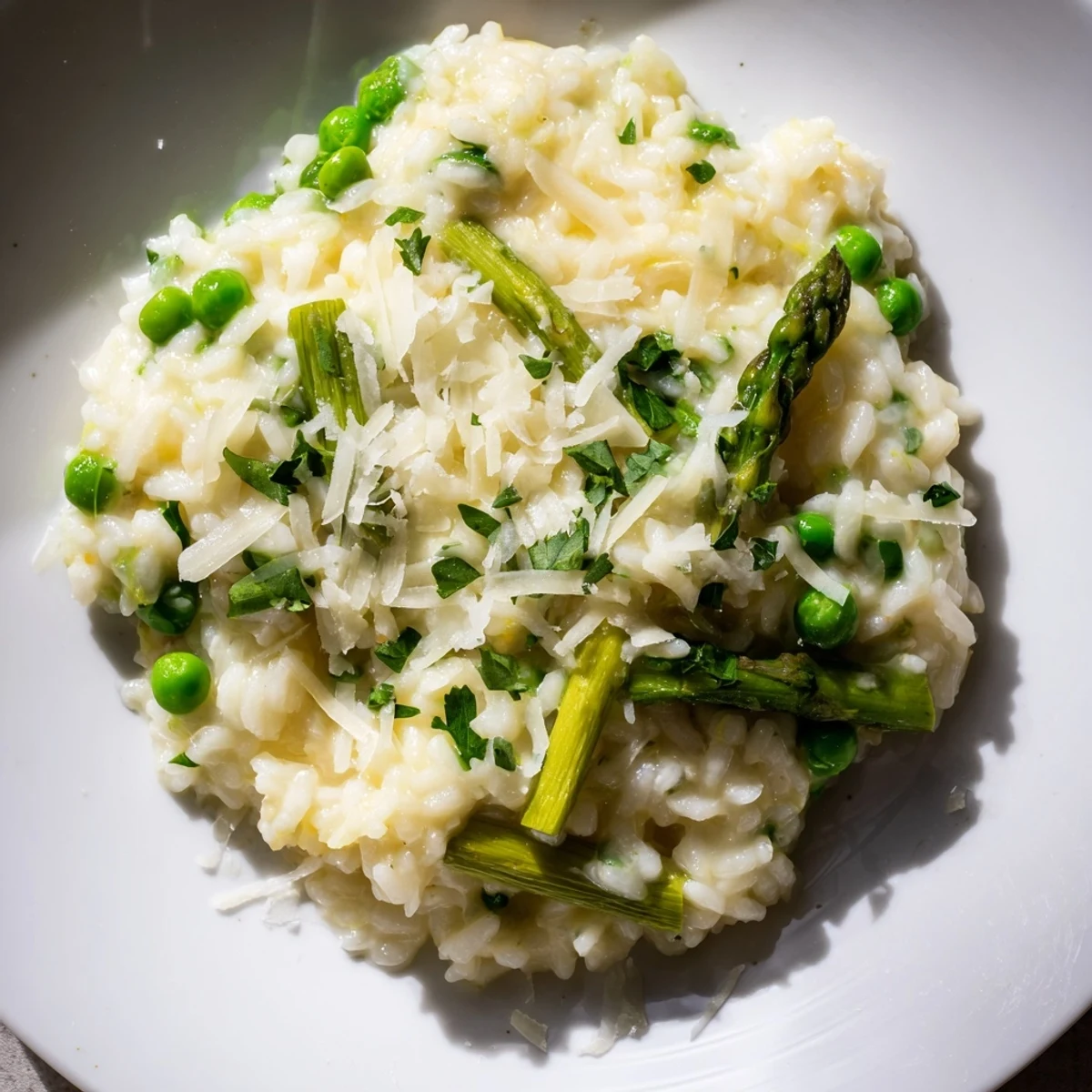
 This dish highlights tender asparagus and vibrant spring peas in a creamy Arborio risotto. Sautéed onion and garlic form the base, with white wine adding depth. Vegetable stock is gradually absorbed for a rich texture. Butter, Parmesan, lemon zest, and fresh parsley finish the dish, creating a harmonious blend of flavors and a smooth, satisfying mouthfeel. Optional cream can enhance richness while keeping the light spring character intact.
The first time I made risotto properly, I stood at the stove for forty five minutes straight, my arm aching from the constant stirring. But when that first forkful hit my tongue, creamy and rich with just the right bite, I understood why Italians treat this dish with such reverence. Now this spring version has become my go to when the markets start overflowing with bright green vegetables and I want something that feels like a hug.
Last April, my friend Sarah came over for dinner and watched me hover over the pot, anxiously adding stock ladle by ladle. She laughed and said she had always been too intimidated to try making risotto at home. By the end of the meal, she was scraping her plate clean and texting me the next day to say she had made it for her family and they were obsessed.
Ingredients
- Arborio rice: This short grain rice releases starch slowly, creating that signature creamy texture without actually needing cream
- Asparagus: Choose spears that are firm and bright green, avoiding any that look woody or limp
- Fresh peas: If you can find them at the farmers market, shell them yourself, otherwise frozen peas work beautifully
- Vegetable stock: Keep it warm in a separate pan, adding cold stock will shock the rice and ruin the texture
- White wine: A dry white like Pinot Grigio adds brightness and cuts through the richness
- Lemon zest: This tiny addition makes all the difference, cutting through the creaminess and making the flavors pop
- Butter and Parmesan: The finishing touch that transforms a good risotto into something extraordinary
Instructions
- Get your stock warm:
- Pour the vegetable stock into a medium saucepan and bring it to a gentle simmer over low heat, keeping it warm throughout the cooking process
- Build your flavor base:
- In a large heavy bottomed pan, heat the olive oil and one tablespoon of butter over medium heat, then add the chopped onion and cook until it turns translucent and soft, about three minutes
- Add the aromatics:
- Stir in the minced garlic and let it cook for just one minute until fragrant, being careful not to let it brown or it will turn bitter
- Toast the rice:
- Add the Arborio rice to the pan and stir constantly for one to two minutes until the grains look slightly opaque around the edges and smell nutty
- Deglaze with wine:
- Pour in the white wine and keep stirring until it has nearly completely evaporated, leaving behind a wonderful fragrance
- Begin the rhythm:
- Add one ladleful of hot stock and stir frequently until the rice has absorbed almost all of it, then add another ladleful and repeat
- Add the asparagus:
- After about fifteen minutes of adding stock, stir in the asparagus pieces and continue adding stock as needed for another ten minutes
- Add the peas:
- Stir in the peas and cook for a final five minutes until the rice is tender but still has a slight bite and the vegetables are bright green
- Finish it off:
- Remove from heat and stir in the remaining butter, Parmesan, lemon zest, parsley, and cream if using, then let it rest covered for two minutes before serving
 Pin it
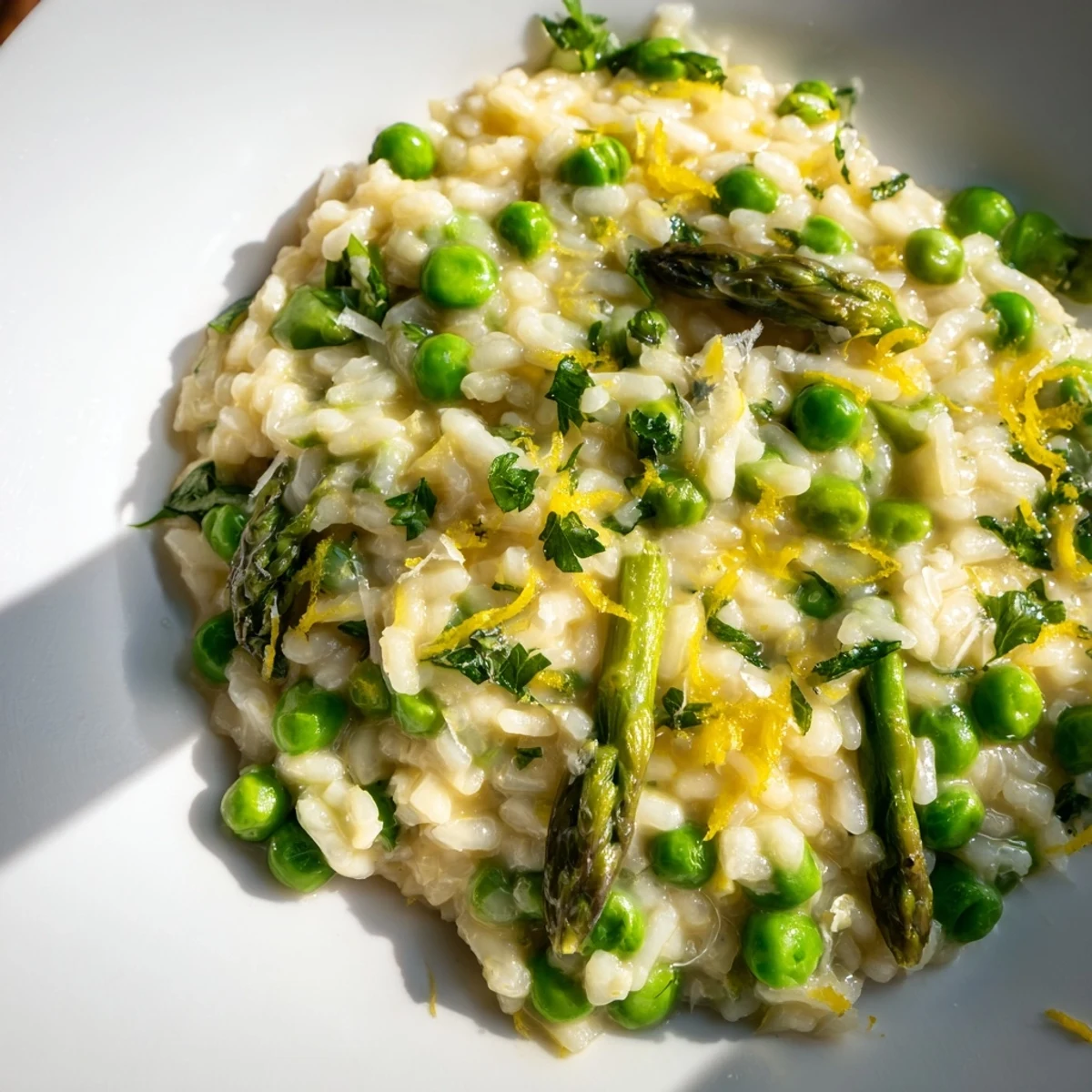
 This risotto has become my signature dish for spring dinner parties. Something about the bright green vegetables against the creamy rice makes people feel like they are eating something special, even though it is surprisingly simple to put together.
Making It Your Own
Once you have mastered the basic technique, risotto becomes a canvas for whatever vegetables are in season. In summer I add cherry tomatoes and basil, in autumn it is mushrooms and sage, and winter calls for butternut squash and thyme.
Timing Is Everything
I have learned to have all my ingredients prepped and measured before I turn on the stove. There is nothing worse than being mid stir and realizing you forgot to grate the Parmesan or chop the parsley.
Serving Suggestions
While risotto can stand alone as a main dish, a simple green salad with a bright vinaigrette cuts through the richness perfectly. A glass of the same white wine you used in the recipe ties everything together beautifully.
- Grate extra Parmesan at the table so everyone can add more to their liking
- A drizzle of good olive oil right before serving adds luxurious flavor
- Risotto waits for no one, so call everyone to the table before you start the final steps
 Pin it
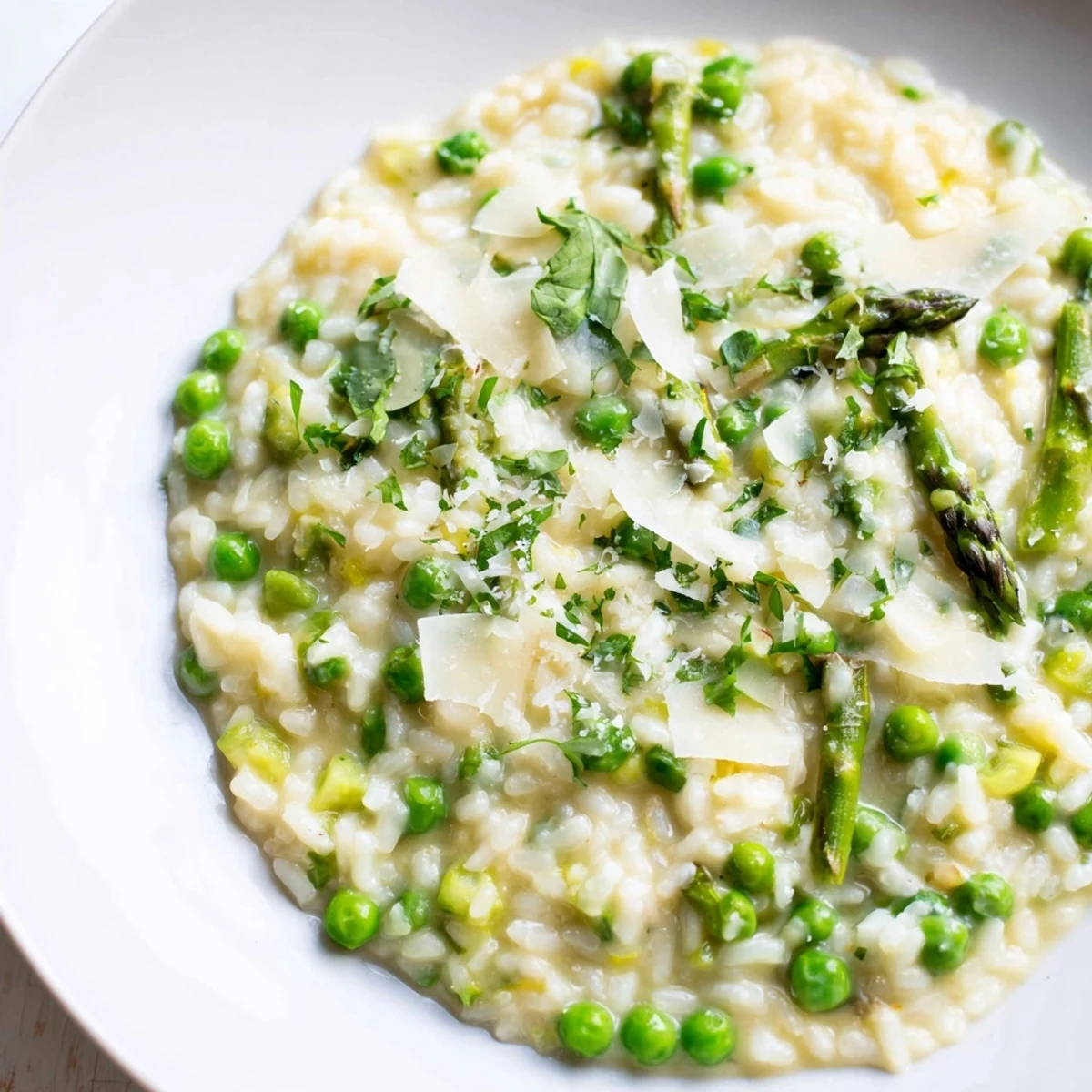
 There is something deeply satisfying about the rhythm of making risotto, the way the rice gradually transforms from hard grains to something luxurious and comforting. Serve this on a spring evening and watch it become an instant favorite.
Common Recipe Questions
- → What kind of rice is best for this dish?
-
Arborio rice is ideal, as its high starch content creates the creamy texture typical of this preparation.
- → Can I use frozen peas instead of fresh?
-
Yes, frozen peas work well and should be added toward the end to retain their bright color and slight sweetness.
- → How do I know when the risotto is perfectly cooked?
-
The rice should be creamy and tender but still have a slight bite to the center for the best texture.
- → What does the white wine contribute to the dish?
-
It adds acidity and depth, balancing the richness and enhancing the overall flavor profile.
- → Can I replace Parmesan with another cheese?
-
Grana Padano or Asiago are good substitutes, providing a similar savory and nutty character.